Reimagining Bus
stops with ETS
Designing an experience to increase ridership in Edmonton.
Designing an experience to increase ridership in Edmonton.
Designing an experience to increase ridership in Edmonton.
Designing an experience to increase ridership in Edmonton.
UX/UI Designer
UX Researcher
UX/UI Designer
UX Researcher
UX/UI Designer
UX Researcher
3 Designers
3 Designers
3 Designers
4 Months
2025
4 Months
2025
4 Months
2025
Service Design
UX/UI
Service Design
UX/UI
Service Design
UX/UI
Figma
Photoshop
Miro
Figma
Photoshop
Miro
Figma
Photoshop
Miro
CONTEXT
CONTEXT
This project, completed in a university partnership with Edmonton Transit Service (ETS) and as part of a team of three, aims to improve the transit experience to help retain and attract riders. Through qualitative research, we identified that users value comfort, safety, intuitive bus stops, real-time information, and clear way-finding.
This project, completed in a university partnership with Edmonton Transit Service (ETS) and as part of a team of three, aims to improve the transit experience to help retain and attract riders. Through qualitative research, we identified that users value comfort, safety, intuitive bus stops, real-time information, and clear way-finding.
THE PROBLEM
THE PROBLEM
While ETS provides essential transportation across the city, many riders perceive the service as confusing, unreliable, and difficult to navigate, particularly for new or occasional users. These perceptions are not solely based on service performance, but on how information is communicated and experienced throughout the transit journey.
While ETS provides essential transportation across the city, many riders perceive the service as confusing, unreliable, and difficult to navigate, particularly for new or occasional users. These perceptions are not solely based on service performance, but on how information is communicated and experienced throughout the transit journey.
Goal:
To redesign bus stops and shelter way-finding across Edmonton to create a seamless, user-friendly experience that encourages increased public transit use.
Goal:
To redesign bus stops and shelter way-finding across Edmonton to create a seamless, user-friendly experience that encourages increased public transit use.
KEY CHALLENGES
KEY CHALLENGES
Bus stops lacked visual hierarchy, making it hard for riders to quickly understand routes, directions, and next steps.
Riders didn’t feel confident about arrivals or delays due to limited or inconsistent real-time information.
Transit details were spread across signage, apps, and digital displays, creating a disconnected experience.
How might we improve the user experience in ETS at bus shelters?
Bus stops lacked visual hierarchy, making it hard for riders to quickly understand routes, directions, and next steps.
Riders didn’t feel confident about arrivals or delays due to limited or inconsistent real-time information.
Transit details were spread across signage, apps, and digital displays, creating a disconnected experience.
How might we improve the user experience in ETS at bus shelters?
RESEARCH
RESEARCH
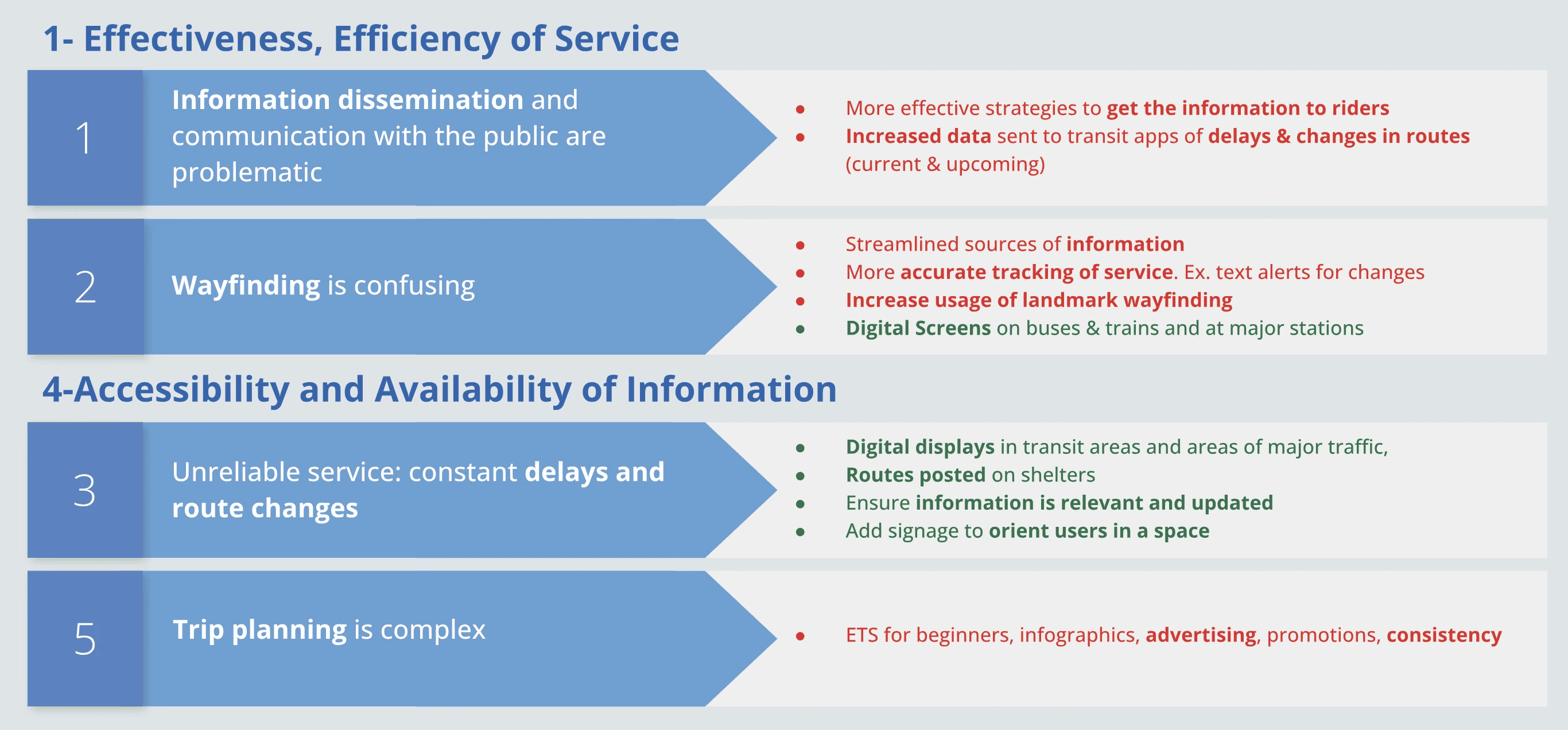
Research revealed key usability issues in public transit, including unclear communication, confusing way-finding, unreliable service updates, and complex trip planning. This project focuses on improving information clarity, real-time updates, accessible way-finding, and consistent messaging to help riders navigate the system more confidently and efficiently.
Research revealed key usability issues in public transit, including unclear communication, confusing way-finding, unreliable service updates, and complex trip planning. This project focuses on improving information clarity, real-time updates, accessible way-finding, and consistent messaging to help riders navigate the system more confidently and efficiently.
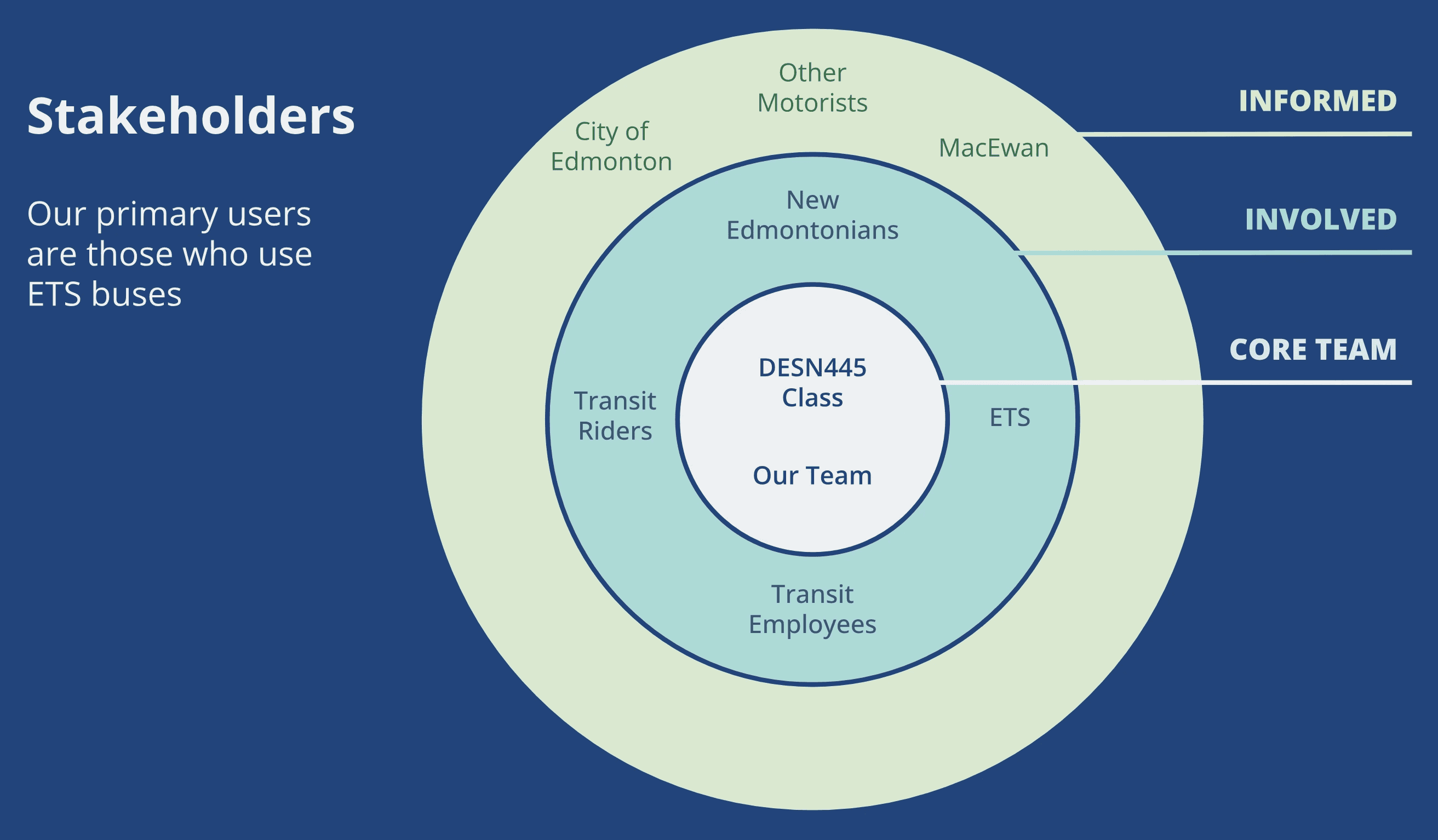
We then explored the stakeholder map that visualizes the ecosystem surrounding our ETS-focused project, centering our class and team of 3 while showing varying levels of involvement.
We then explored the stakeholder map that visualizes the ecosystem surrounding our ETS-focused project, centering our class and team of 3 while showing varying levels of involvement.
With stakeholders defined, the focus narrows to transit commuters. As daily users of ETS bus shelters, they need spaces that are comfortable, safe, and intuitive so waiting feels seamless and wayfinding feels effortless. This user need became the foundation for every design decision moving forward.
With stakeholders defined, the focus narrows to transit commuters. As daily users of ETS bus shelters, they need spaces that are comfortable, safe, and intuitive so waiting feels seamless and wayfinding feels effortless. This user need became the foundation for every design decision moving forward.
" As a transit commuter, I want a bus shelter that is comfortable, safe, and intuitive, to make the most out of my wait time and effortlessly navigate my routes. "
" As a transit commuter, I want a bus shelter that is comfortable, safe, and intuitive, to make the most out of my wait time and effortlessly navigate my routes. "
" As a transit commuter, I want a bus shelter that is comfortable, safe, and intuitive, to make the most out of my wait time and effortlessly navigate my routes. "
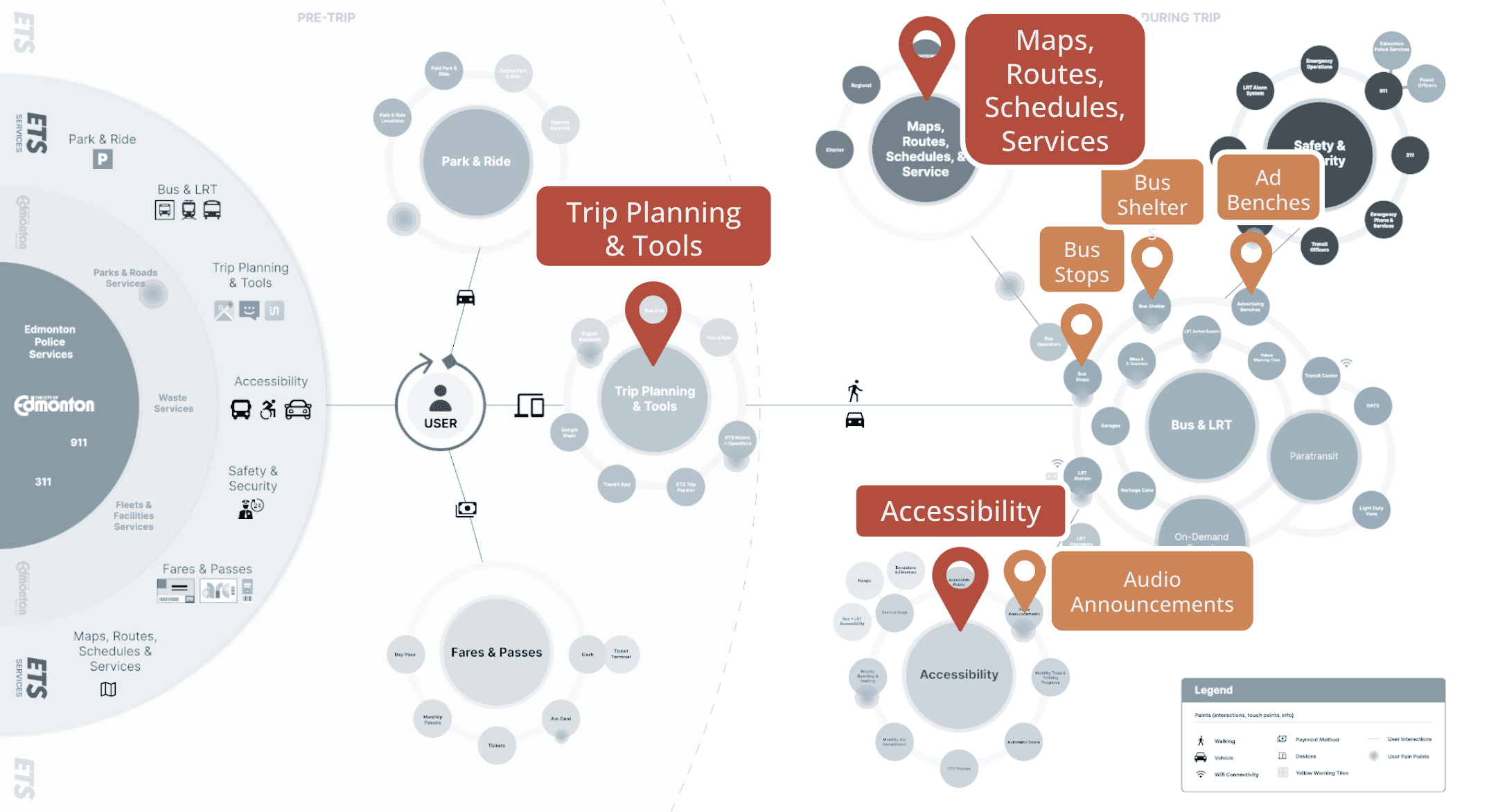
Grounded in this user need, we mapped the ETS journey to reveal key touch points before and during the trip. This system view exposes friction points and opportunities across planning, payment, accessibility, and transit services, helping pinpoint where design impact matters most.
Grounded in this user need, we mapped the ETS journey to reveal key touch points before and during the trip. This system view exposes friction points and opportunities across planning, payment, accessibility, and transit services, helping pinpoint where design impact matters most.
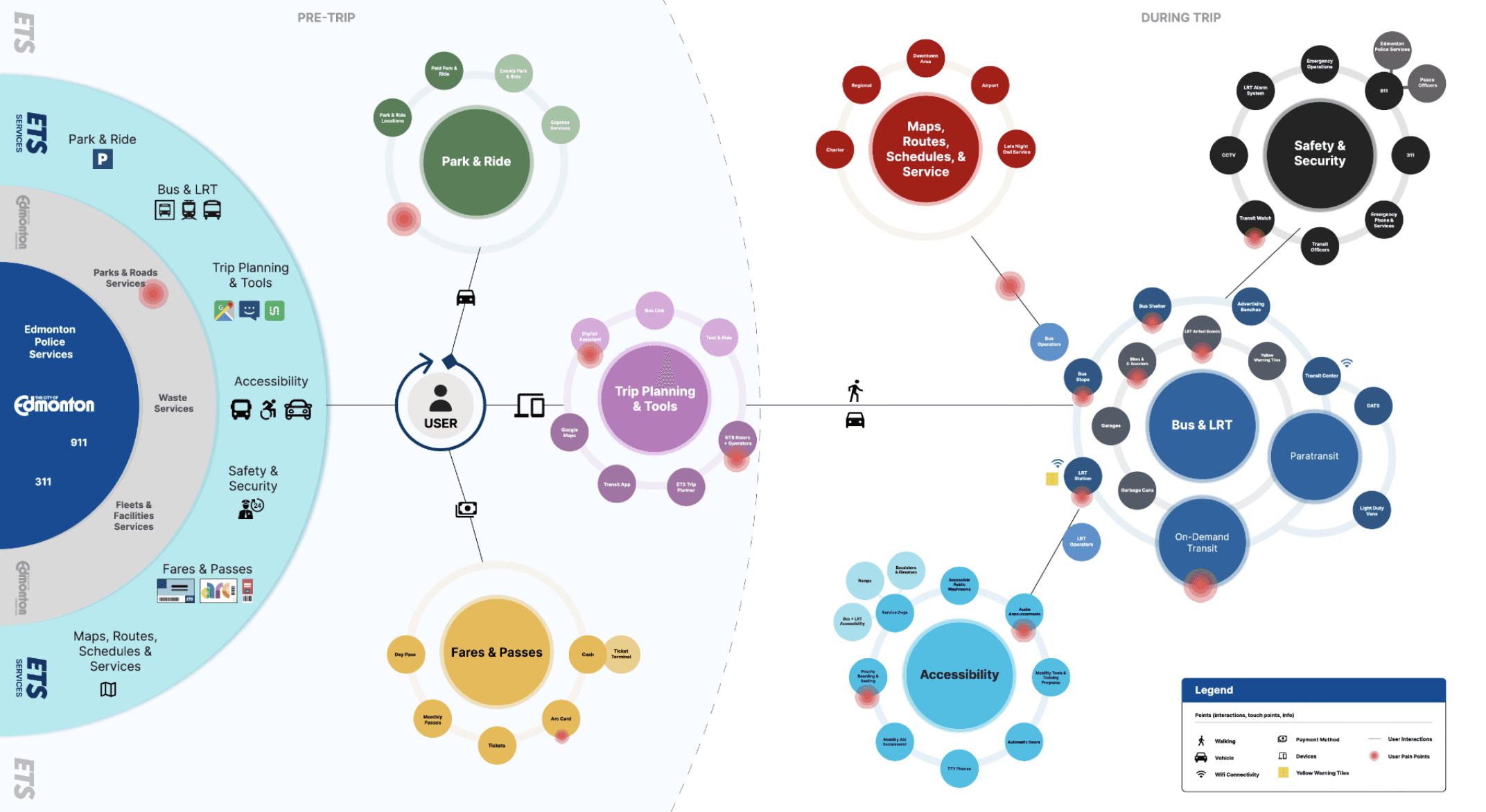
After this, key rider touch points were clarified and prioritized. Trip planning tools, maps and schedules, stop-level information, and accessibility features were surfaced at the right moments, creating a more intuitive, consistent, and accessible end-to-end transit experience.
After this, key rider touch points were clarified and prioritized. Trip planning tools, maps and schedules, stop-level information, and accessibility features were surfaced at the right moments, creating a more intuitive, consistent, and accessible end-to-end transit experience.
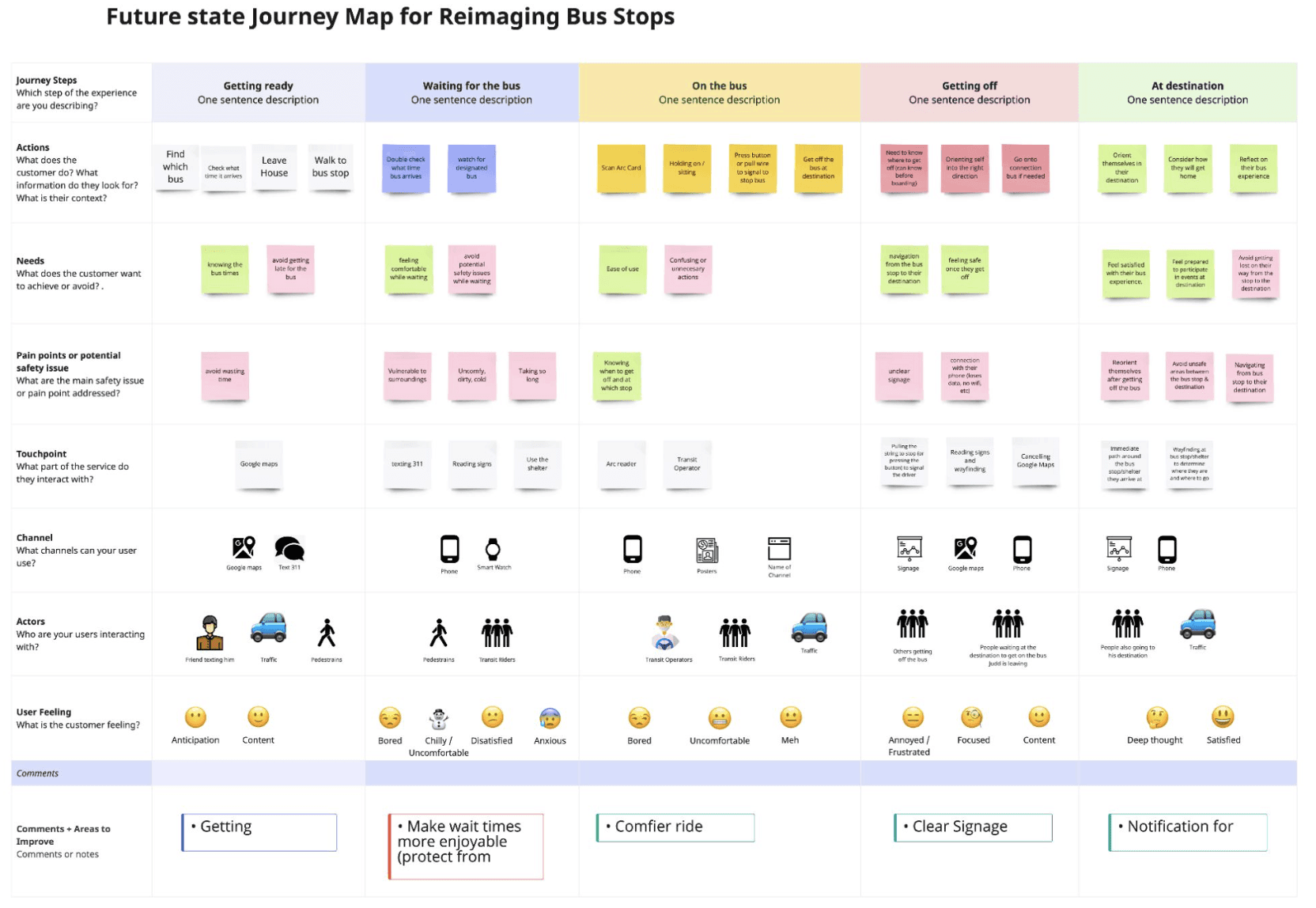
With all the research, we then made a user journey map where:
The user checks bus times before leaving, walks to the stop, and waits while needing comfort, safety, and clear updates. On the bus, they want a smooth ride and to know exactly when to get off. After exiting, clear signage and way-finding help them reach their destination confidently and feel satisfied with the experience.
With all the research, we then made a user journey map where:
The user checks bus times before leaving, walks to the stop, and waits while needing comfort, safety, and clear updates. On the bus, they want a smooth ride and to know exactly when to get off. After exiting, clear signage and way-finding help them reach their destination confidently and feel satisfied with the experience.
IDEATION
IDEATION
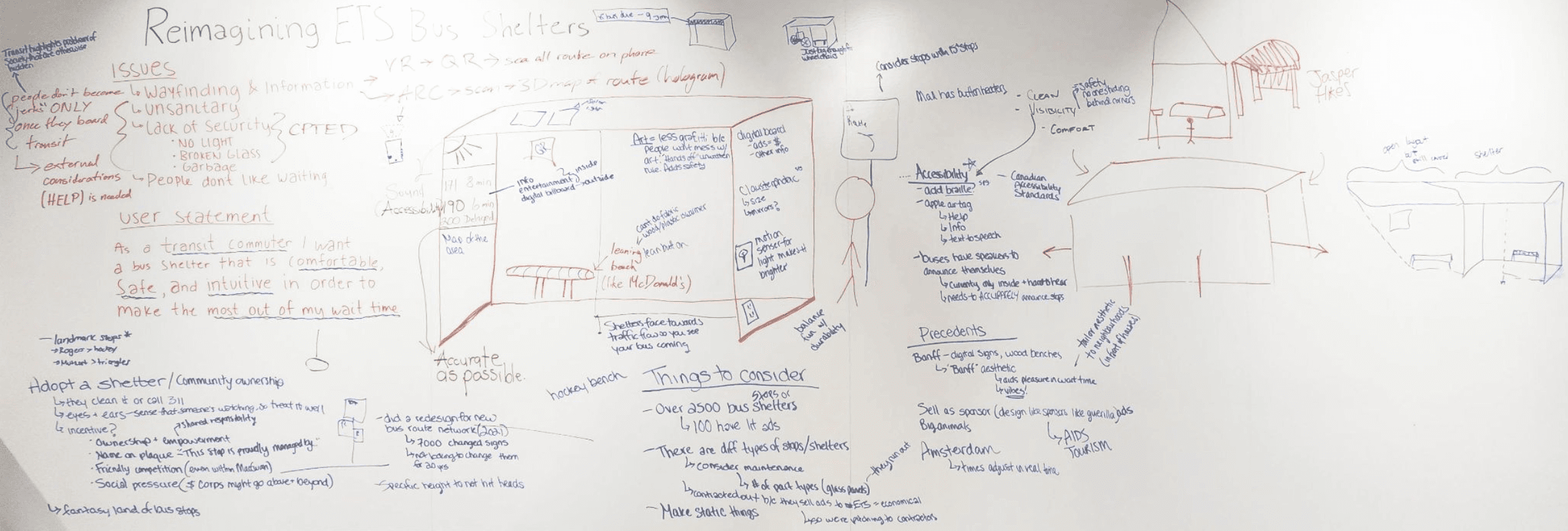
During our co-design session, our team worked with ETS employees to explore their biggest dreams for future bus shelters without worrying about feasibility. They shared insights from their daily work and brainstormed ideas around safety, comfort, accessibility, and way-finding. Participants wrote and sketched directly on the shelter diagram to make the workshop hands on and visual.
During our co-design session, our team worked with ETS employees to explore their biggest dreams for future bus shelters without worrying about feasibility. They shared insights from their daily work and brainstormed ideas around safety, comfort, accessibility, and way-finding. Participants wrote and sketched directly on the shelter diagram to make the workshop hands on and visual.
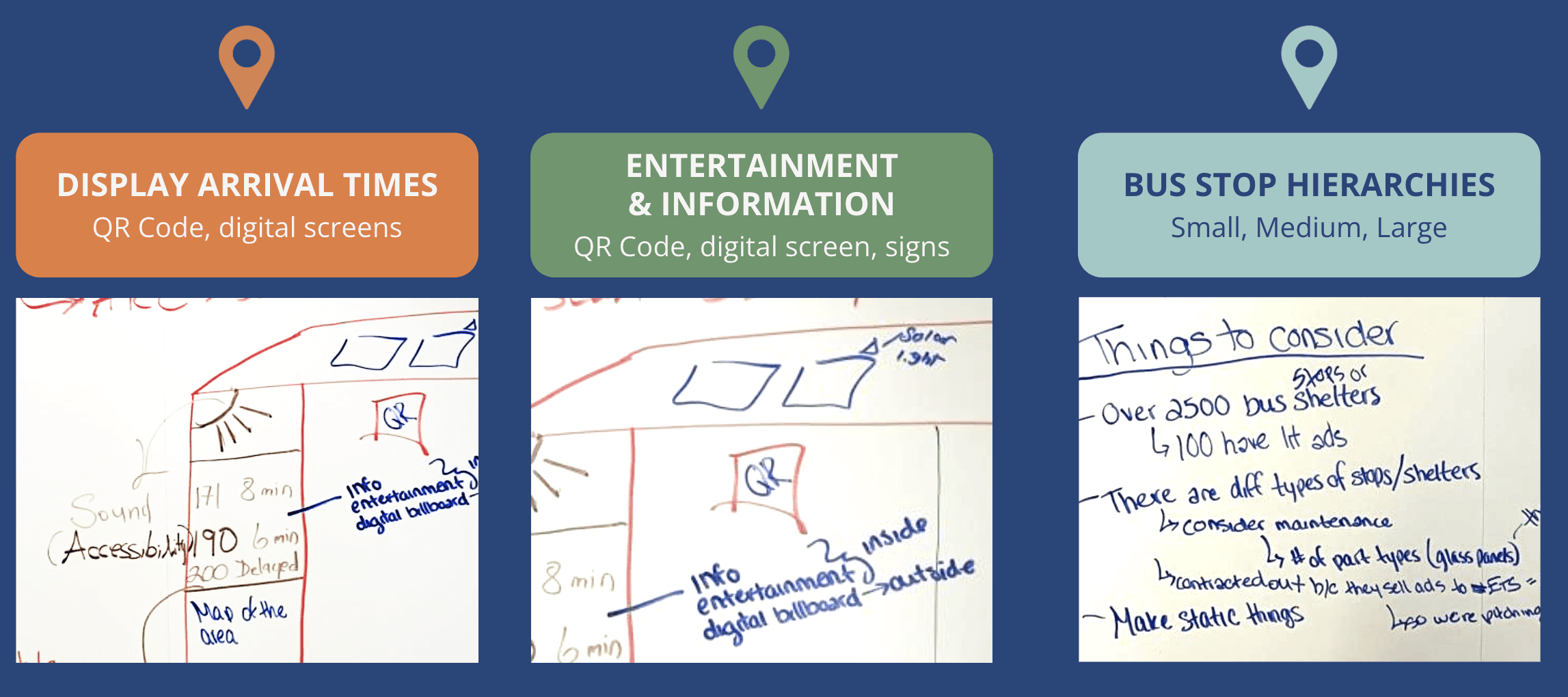
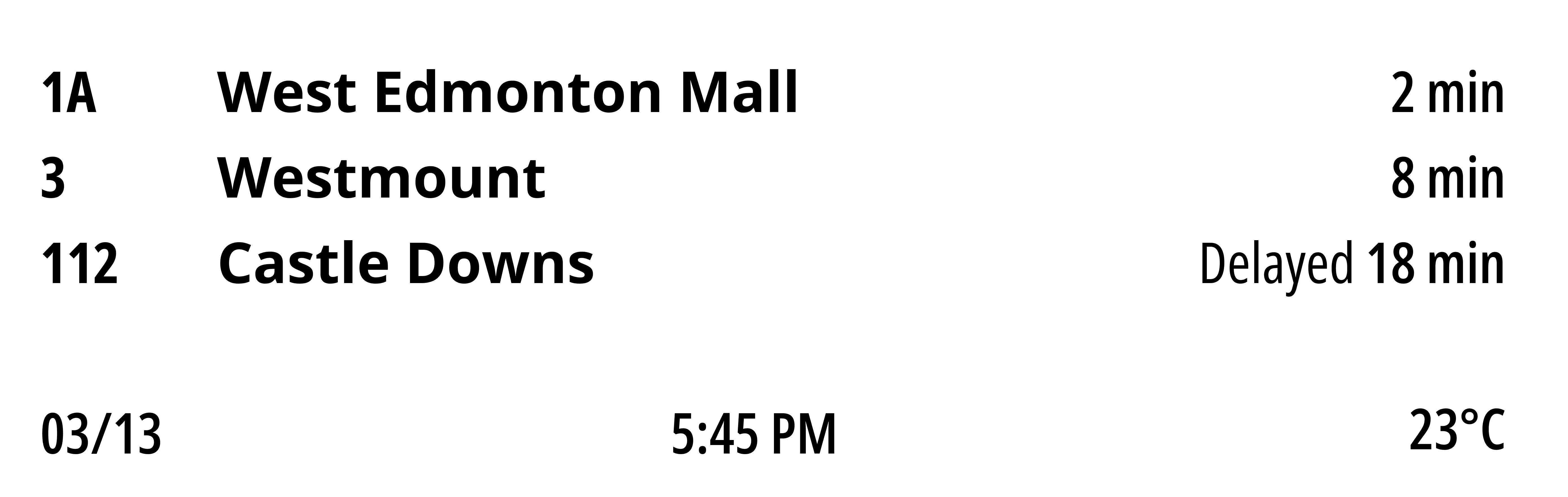
From our co design session with ETS employees, three key insights stood out. Participants emphasized the need for clear arrival time displays using digital screens or QR codes, more entertainment and transit information to make waiting feel easier, and a tiered bus stop system (small, medium, large) so shelters can better match the needs of different locations and rider volumes.
From our co design session with ETS employees, three key insights stood out. Participants emphasized the need for clear arrival time displays using digital screens or QR codes, more entertainment and transit information to make waiting feel easier, and a tiered bus stop system (small, medium, large) so shelters can better match the needs of different locations and rider volumes.
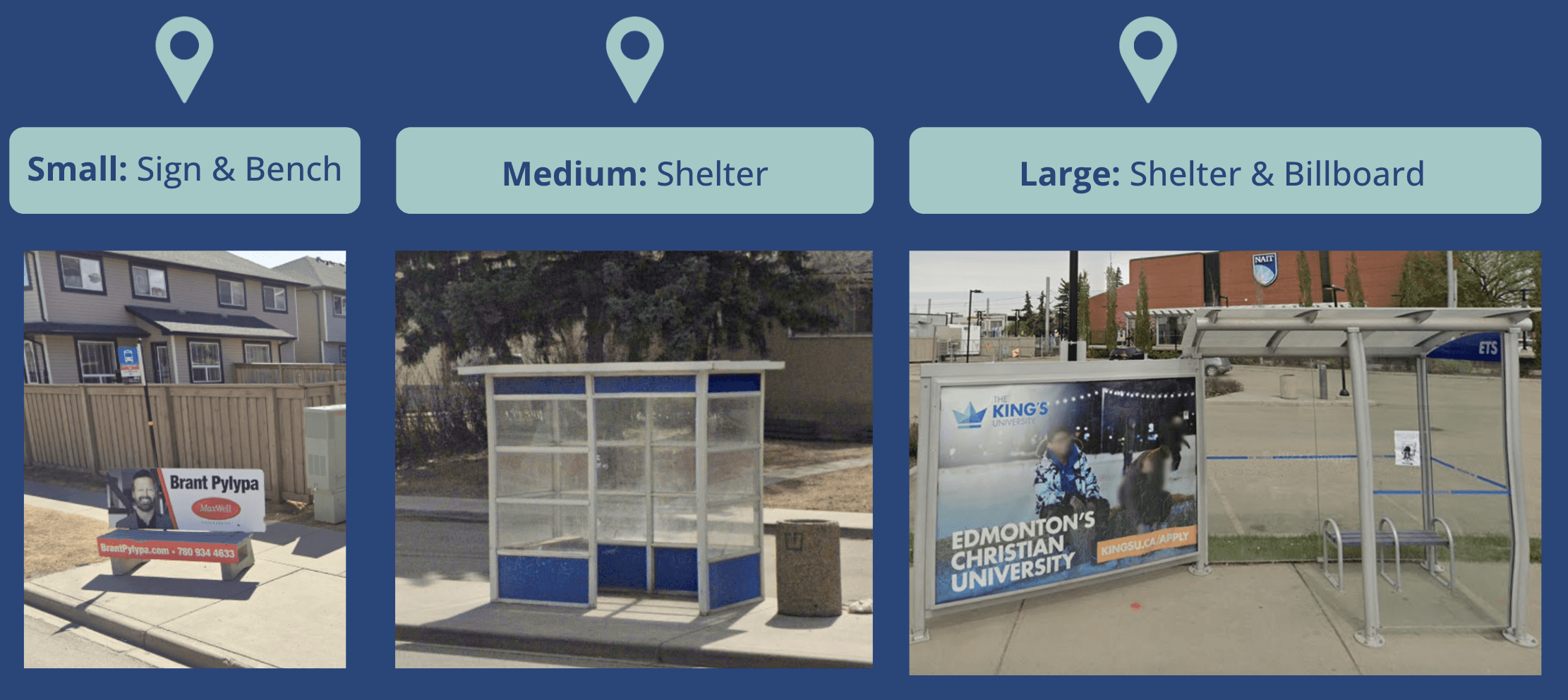
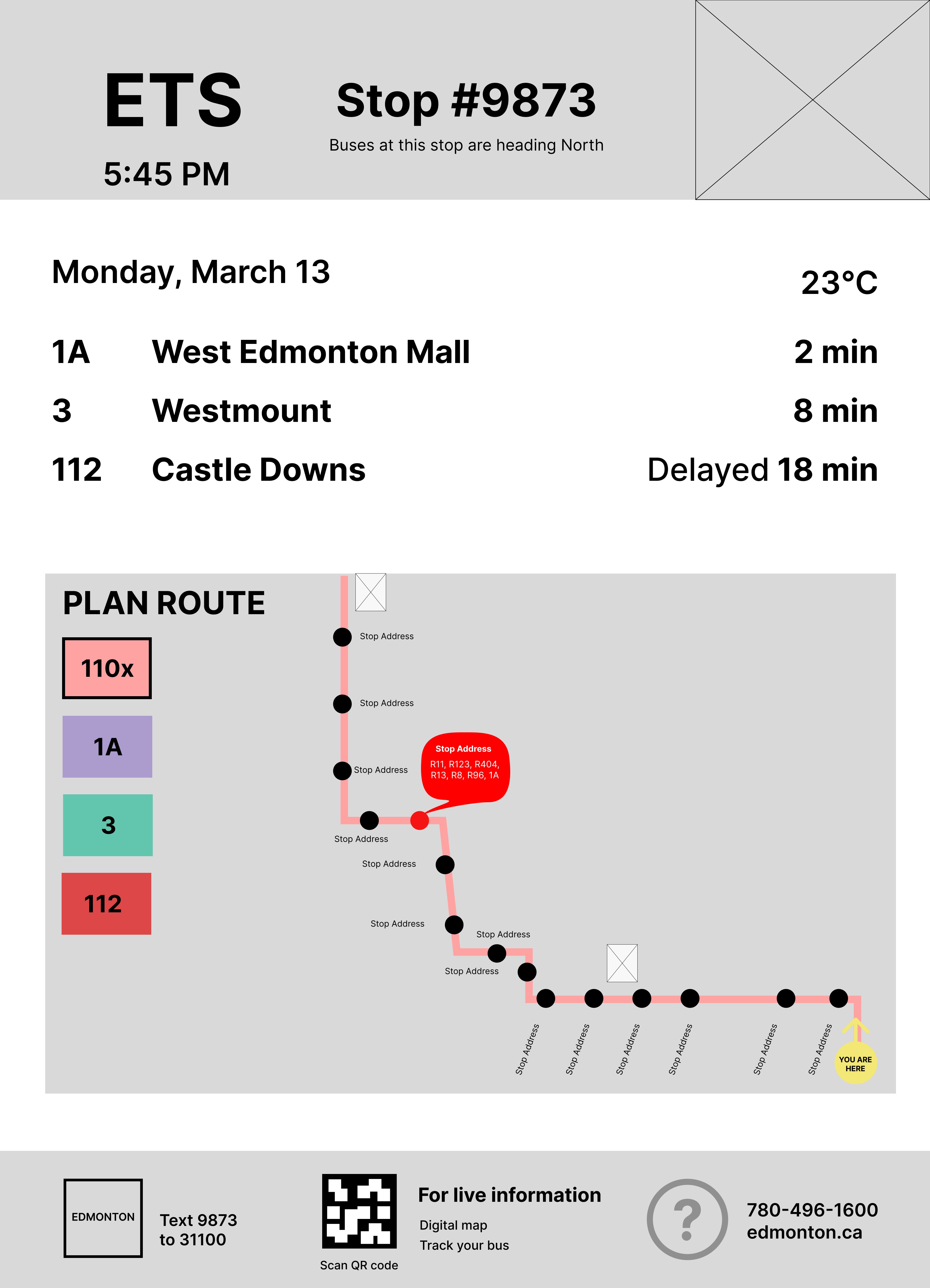
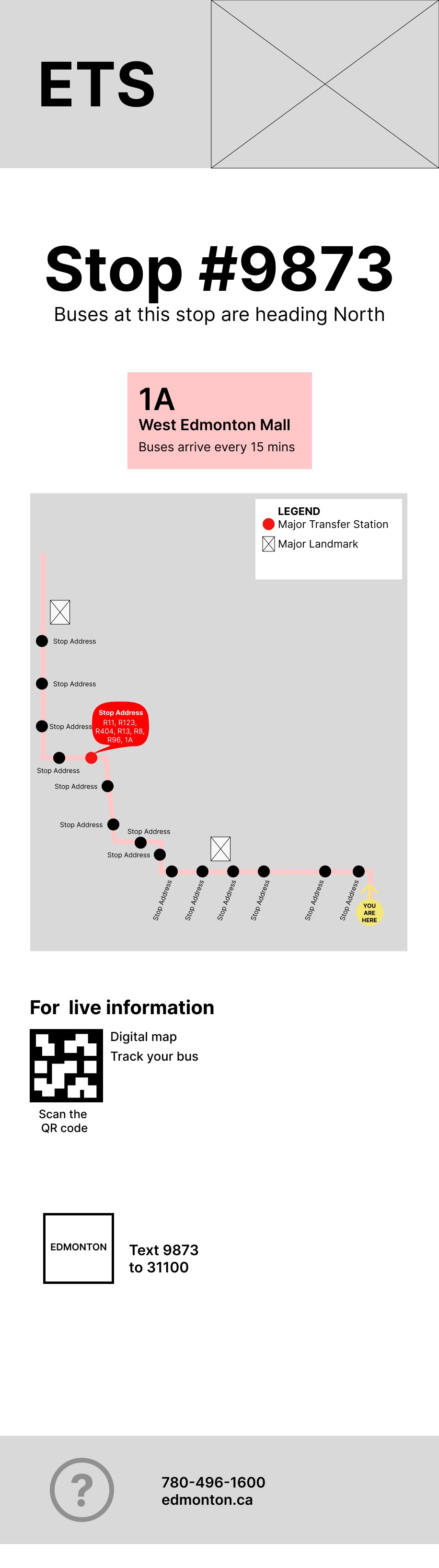
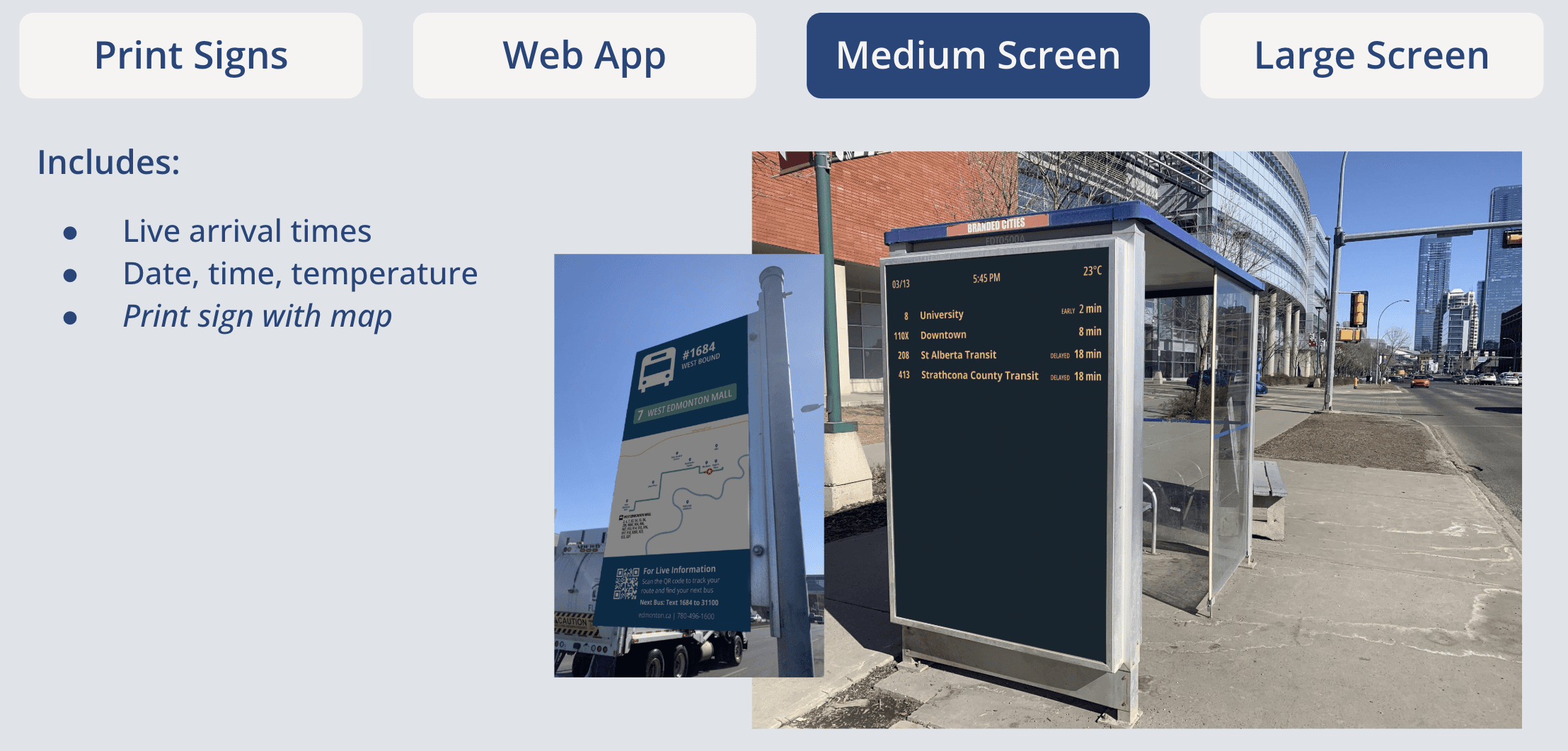
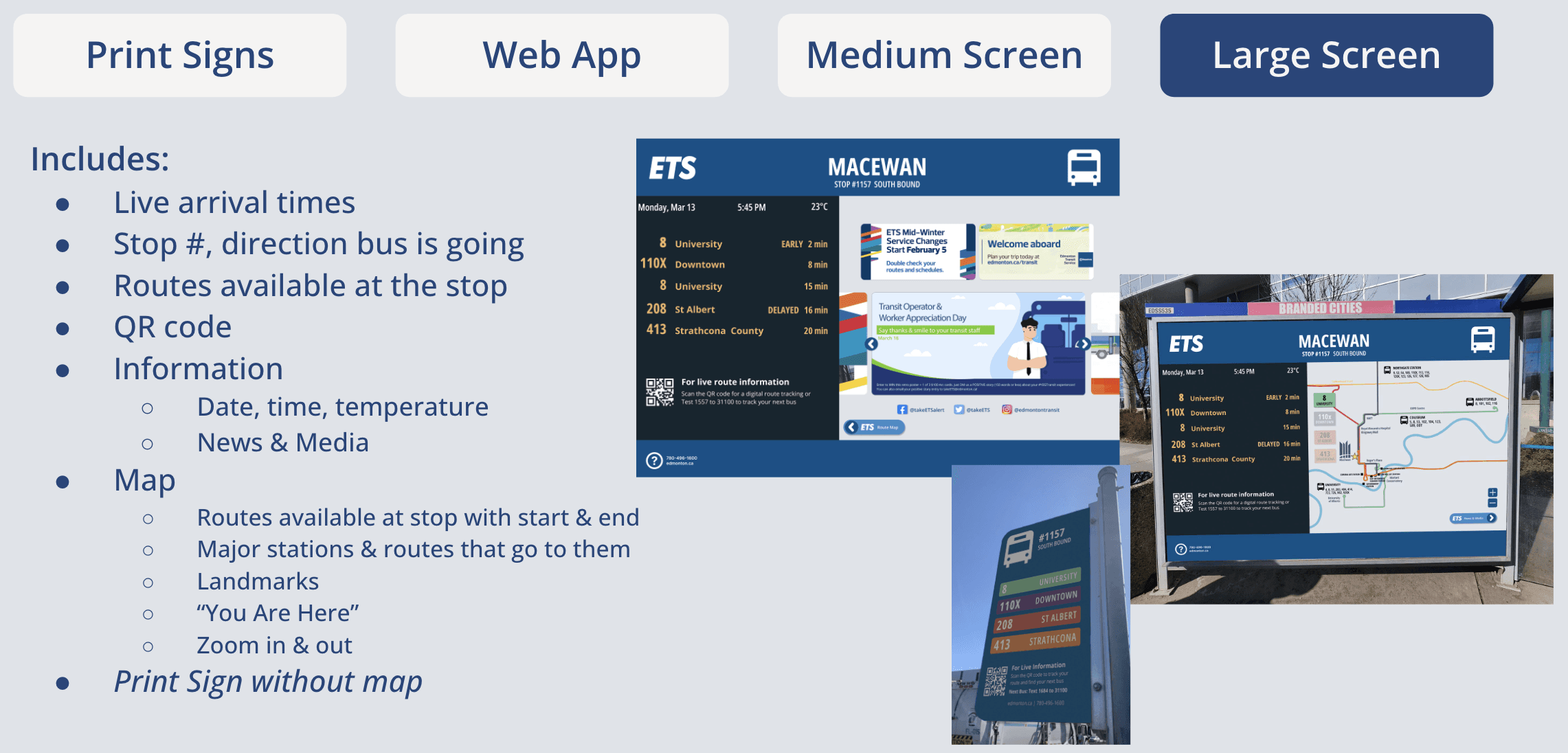
ETS shelters can be grouped into three levels. Small stops usually have a sign and sometimes a bench. Medium stops include a shelter and may have ad space. Large stops typically have a bigger shelter with a billboard wing. While not every stop fits perfectly, this hierarchy guided our project.
ETS shelters can be grouped into three levels. Small stops usually have a sign and sometimes a bench. Medium stops include a shelter and may have ad space. Large stops typically have a bigger shelter with a billboard wing. While not every stop fits perfectly, this hierarchy guided our project.
USER TESTING
USER TESTING
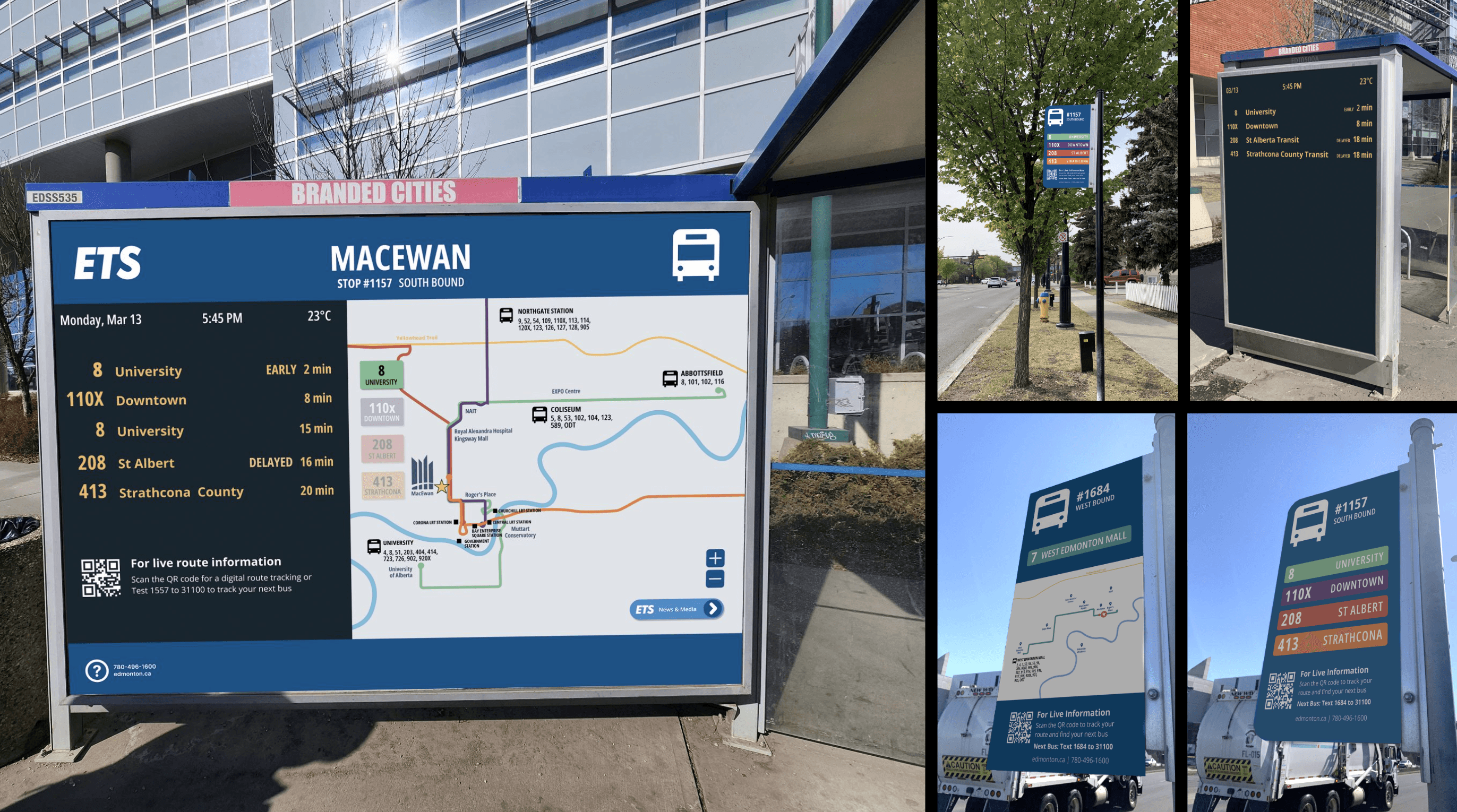
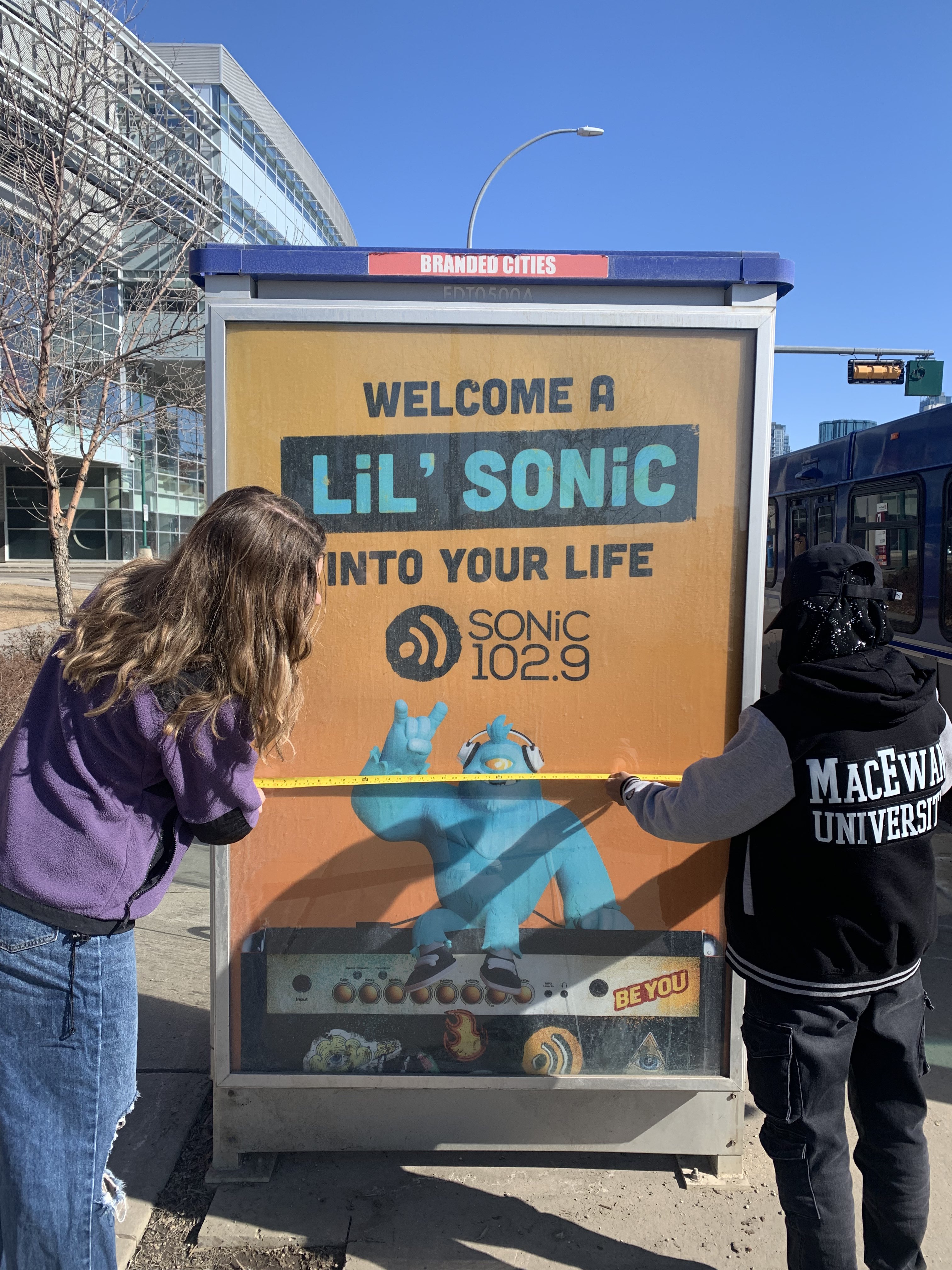
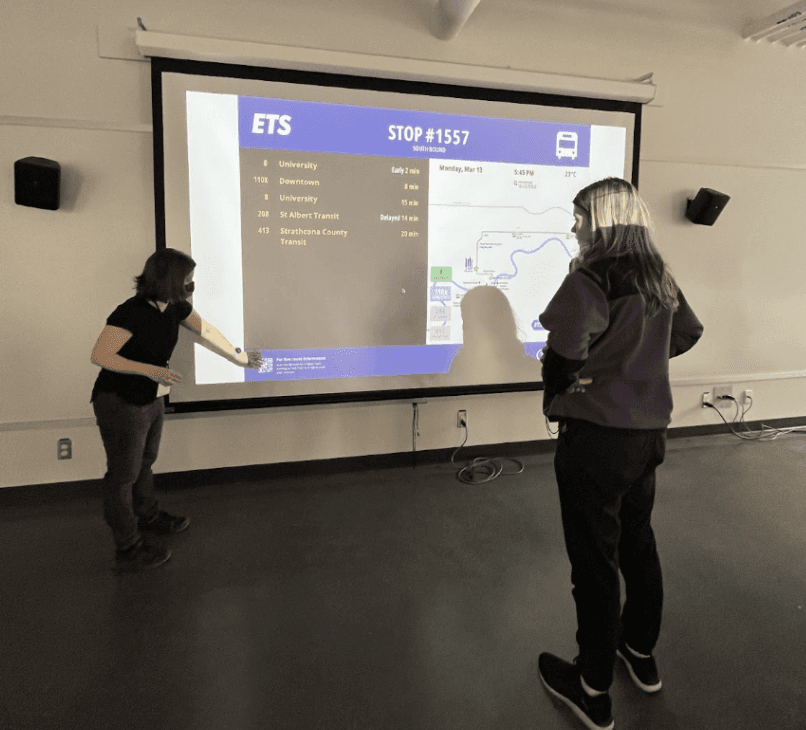
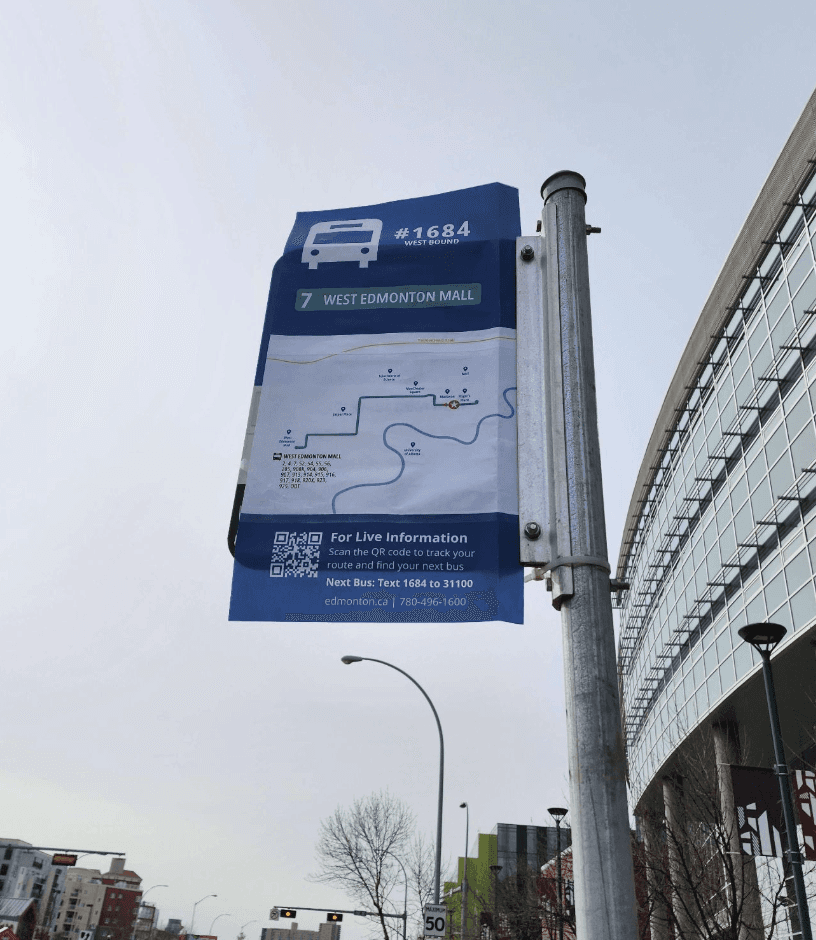
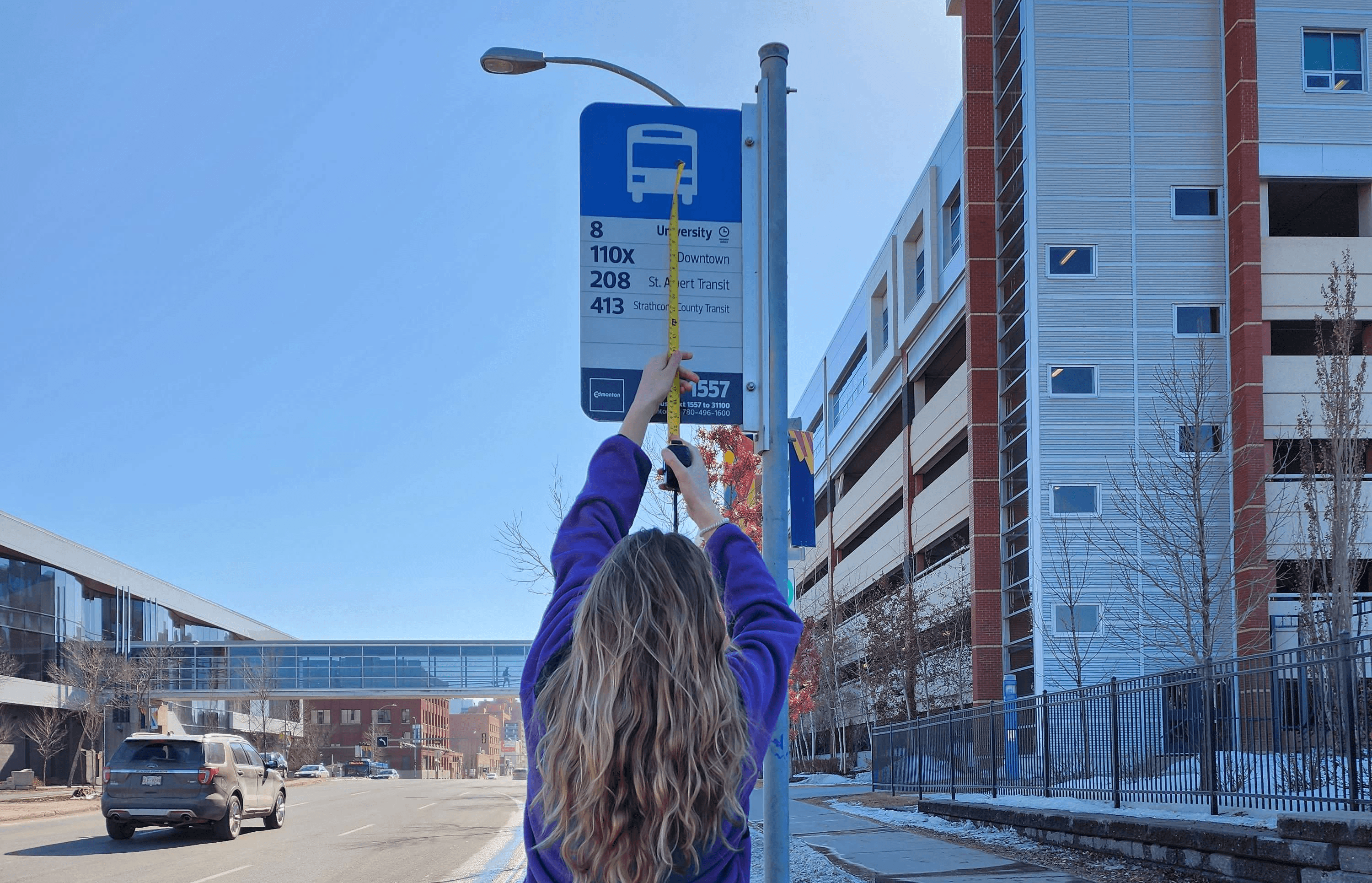
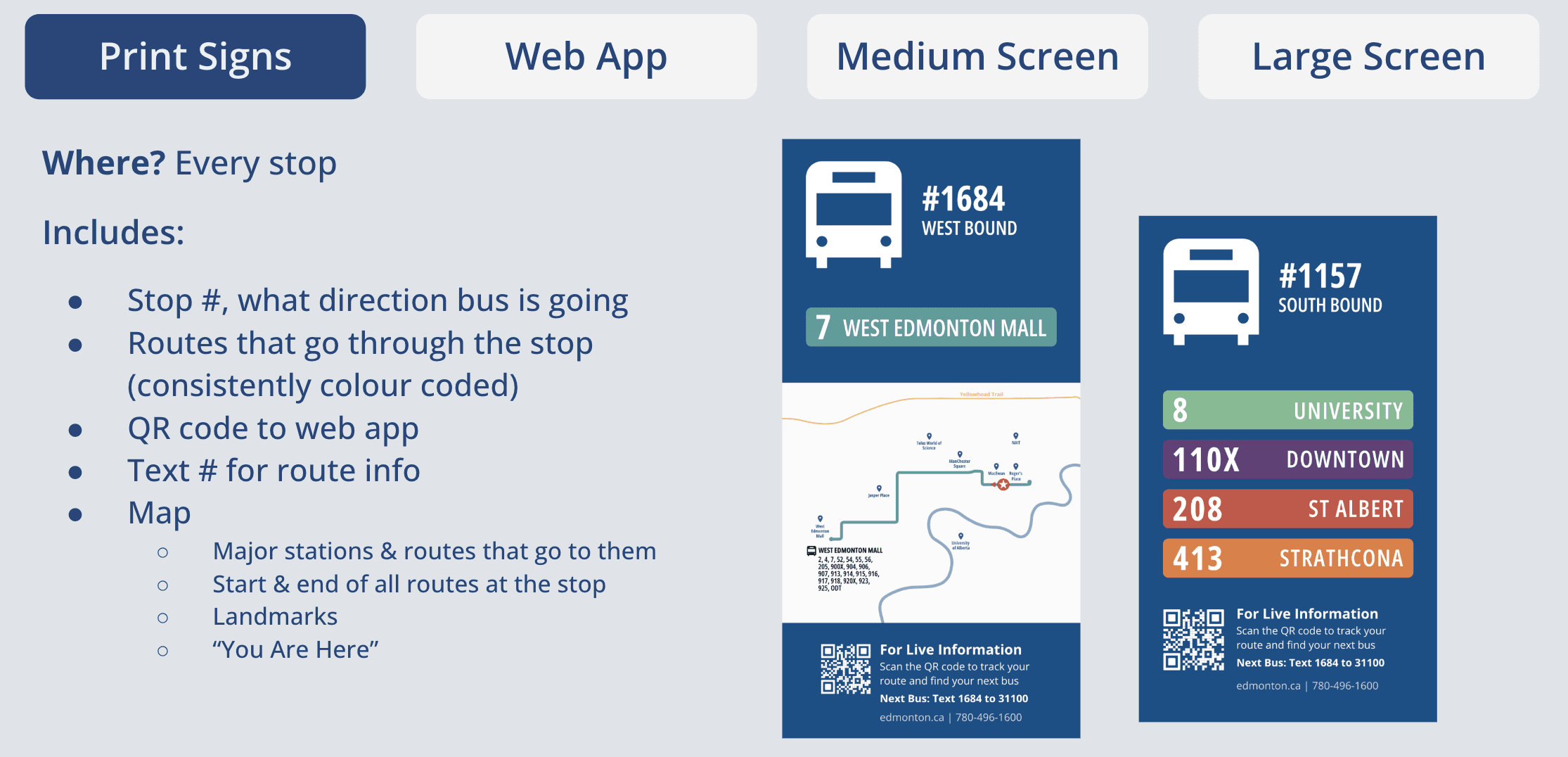
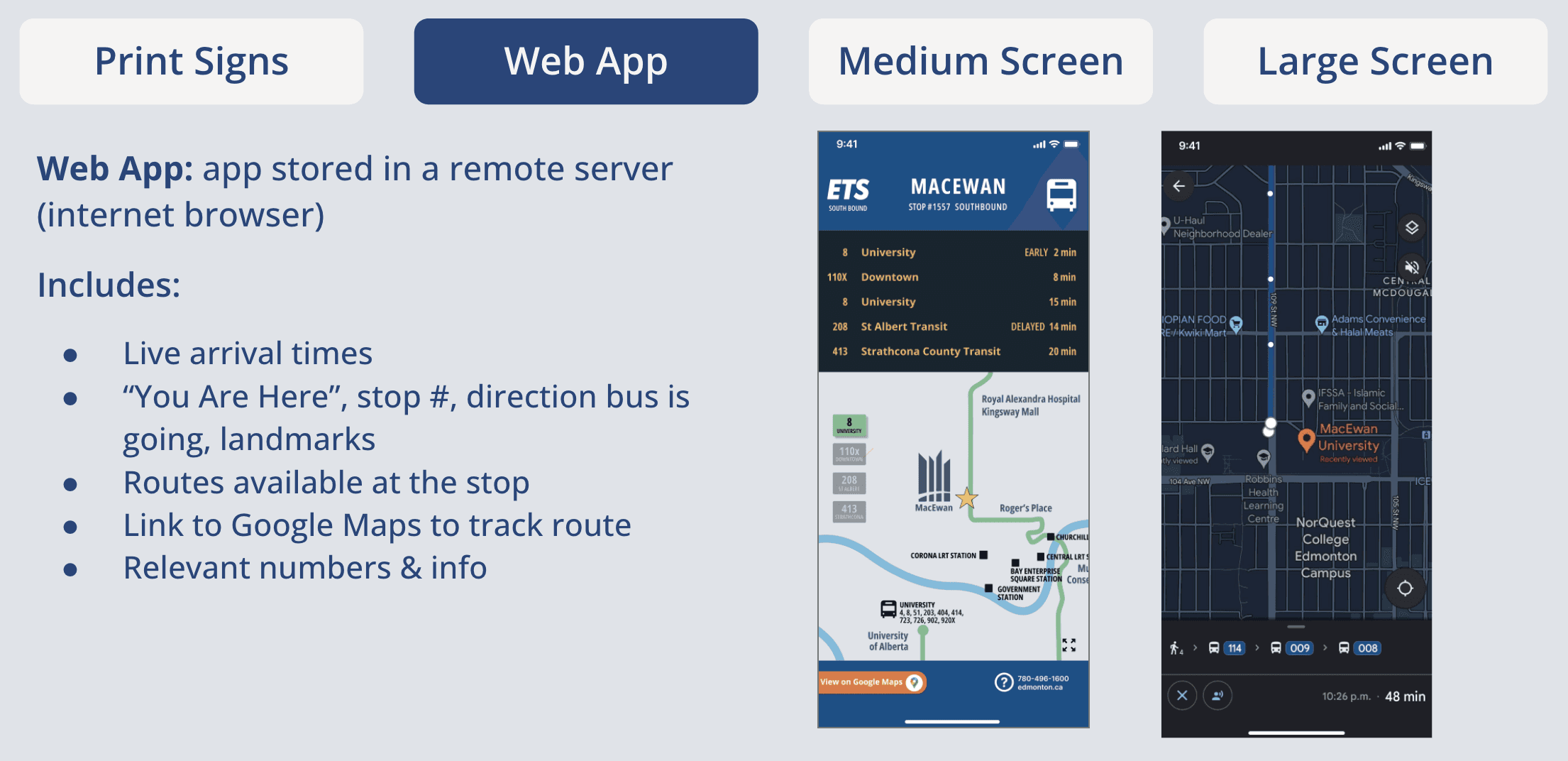
We tested our signage directly at bus stops by observing riders in real-world conditions. New signs were placed over existing ones along the same routes to avoid confusion and minimize disruption. Participants reviewed the signage, shared immediate feedback, and scanned a live QR code to access the web app prototype. The testing confirmed strong clarity and usability, with only minor adjustments needed.
We tested our signage directly at bus stops by observing riders in real-world conditions. New signs were placed over existing ones along the same routes to avoid confusion and minimize disruption. Participants reviewed the signage, shared immediate feedback, and scanned a live QR code to access the web app prototype. The testing confirmed strong clarity and usability, with only minor adjustments needed.
WIREFRAMES
WIREFRAMES
SOLUTION
SOLUTION
REFLECTION
REFLECTION
This project pushed me to grow as a designer by working within real transit environments and collaborating closely with Edmonton Transit Service. I learned how to advocate for users while balancing stakeholder needs, communicate ideas clearly within a team, and adapt designs based on real-world feedback. It reinforced my belief that thoughtful UX can reduce frustration and make complex systems feel more human.
This project pushed me to grow as a designer by working within real transit environments and collaborating closely with Edmonton Transit Service. I learned how to advocate for users while balancing stakeholder needs, communicate ideas clearly within a team, and adapt designs based on real-world feedback. It reinforced my belief that thoughtful UX can reduce frustration and make complex systems feel more human.