Novice

Novice

Novice

Designing a gamified time-management app that helps students build strong, long-term time management habits.
Designing a gamified time-management app that helps students build strong, long-term time management habits.

Designing a gamified time-management app that helps students build strong, long-term time management habits.
ROLE

Individual
UX/UI Design
UX Researcher

Individual
UX/UI Design
UX Researcher

Individual
UX/UI Design

CONTEXT

Capstone Project

Capstone Project

Capstone Project

TIMELINE

5 Weeks
2025

5 Weeks
2025

5 Weeks
2025

TOOLS

Figma
Illustrator

Figma
Illustrator

Figma
Illustrator

CONTEXT

CONTEXT

What is Novice?

What is Novice?

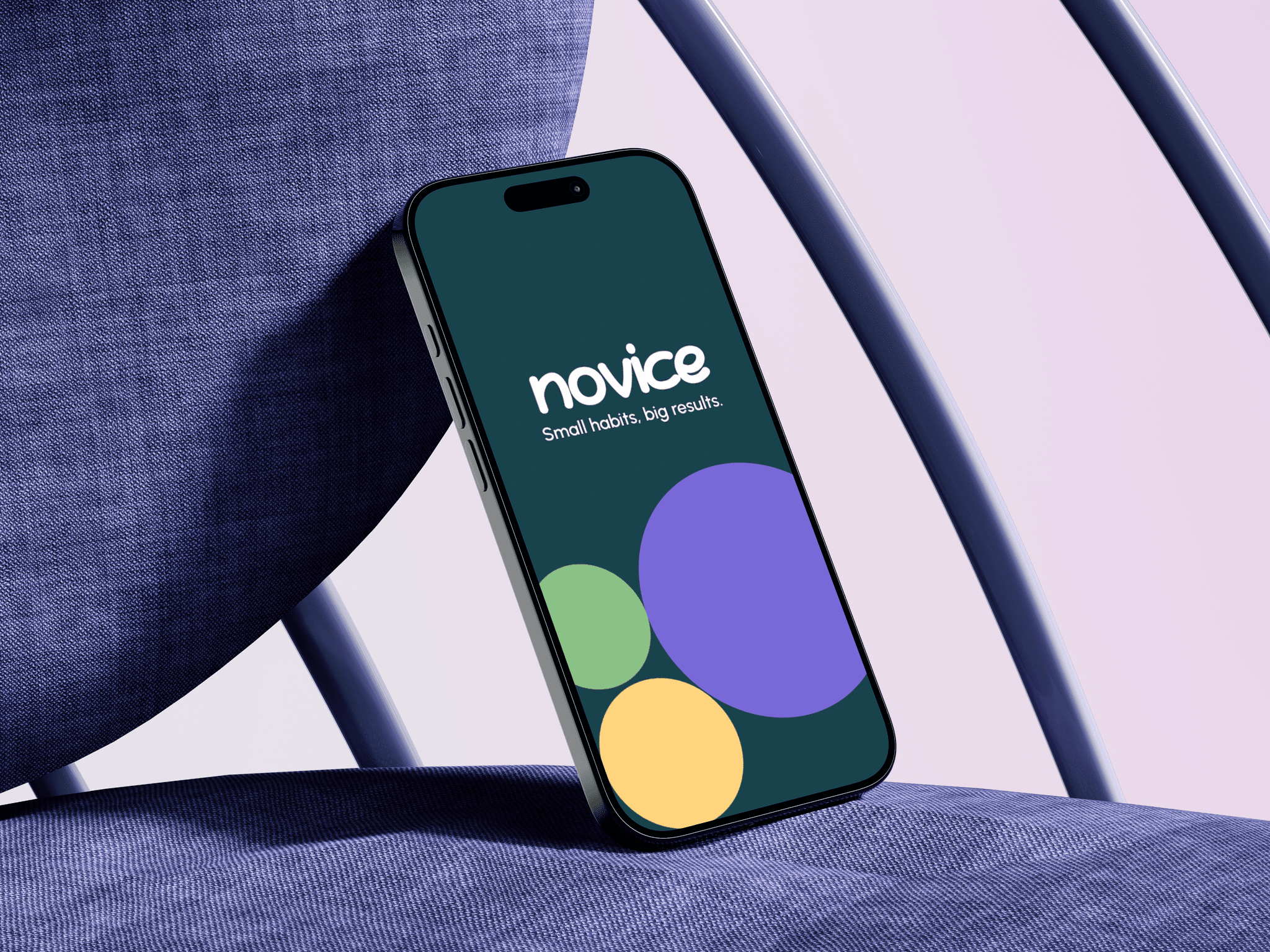
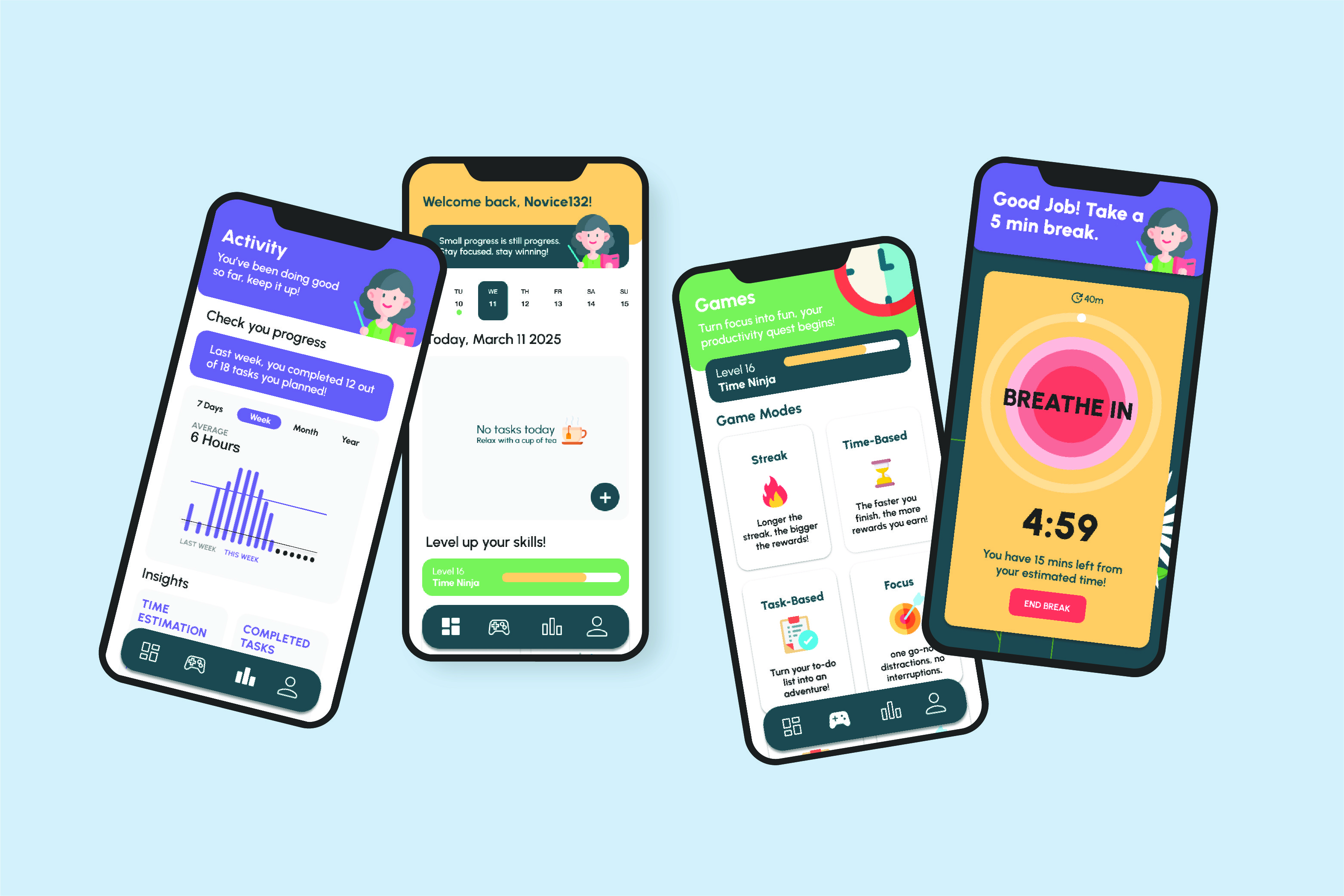
NOVICE is an innovative time management app that makes productivity engaging. It combines interactive games, a personalized mentor for guidance and motivation, and a smart calendar for effortless scheduling, helping users build better habits, stay organized, and manage their time effectively.

NOVICE is an innovative time management app that makes productivity engaging. It combines interactive games, a personalized mentor for guidance and motivation, and a smart calendar for effortless scheduling, helping users build better habits, stay organized, and manage their time effectively.

PROBLEM

PROBLEM

Caught between classes, deadlines and life.

Caught between classes, deadlines and life.

For many students, managing time feels like a constant struggle. Balancing classes, assignments, work, and personal responsibilities often leaves little room for effective planning. Frequent distractions and unclear priorities make it hard to stay focused, while planning tools are used inconsistently or abandoned altogether. As a result, students experience increased stress, overwhelm, and reduced productivity, leaving them feeling behind despite their efforts.


For many students, managing time feels like a constant struggle. Balancing classes, assignments, work, and personal responsibilities often leaves little room for effective planning. Frequent distractions and unclear priorities make it hard to stay focused, while planning tools are used inconsistently or abandoned altogether. As a result, students experience increased stress, overwhelm, and reduced productivity, leaving them feeling behind despite their efforts.


Which leads to the question…


Which leads to the question…


How might we create a time-management tool that makes planning fun and engaging so students can build strong, long-term time management habits?

How might we create a time-management tool that makes planning fun and engaging so students can build strong, long-term time management habits?

USER RESEARCH

USER RESEARCH

Designing with students, not just for them.

Designing with students, not just for them.

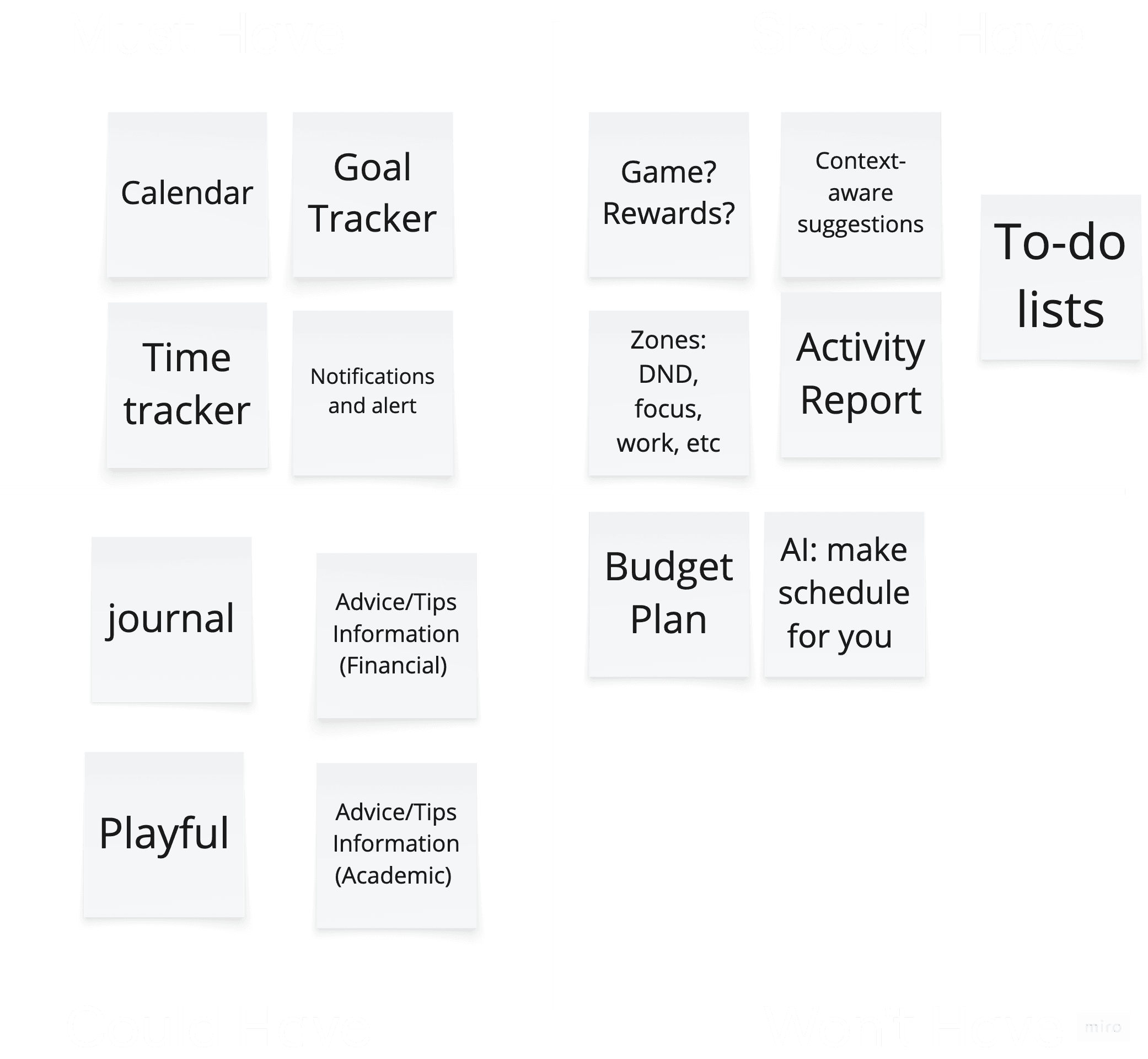
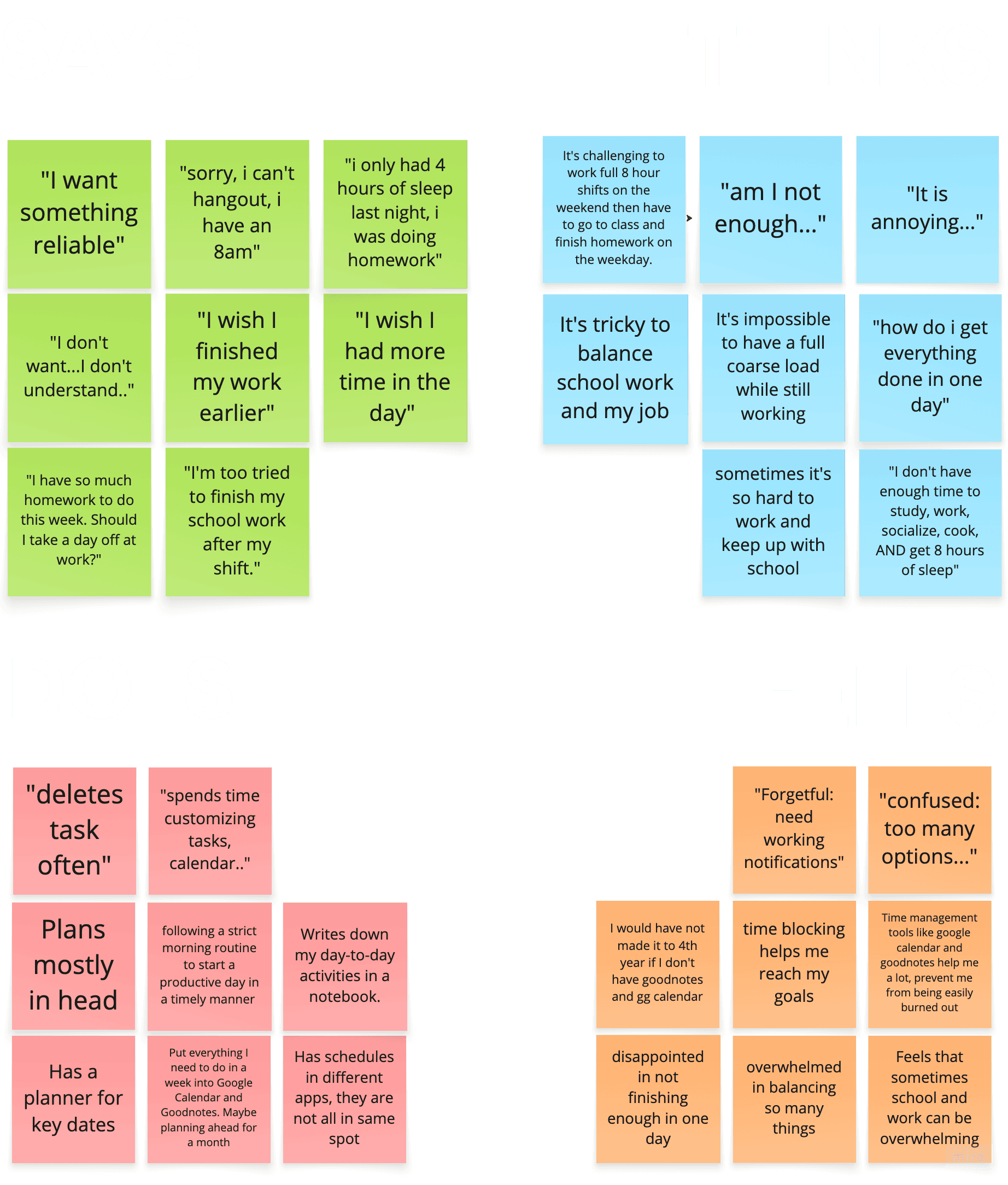
I conducted co-design sessions and interviews with working students (18–24) to uncover their experiences balancing school and work. Using an Empathy Map, I identified stress points, motivations, and coping behaviours. Insights were prioritized with MoSCoW analysis to guide realistic, user-centered features for a time management app.

I conducted co-design sessions and interviews with working students (18–24) to uncover their experiences balancing school and work. Using an Empathy Map, I identified stress points, motivations, and coping behaviours. Insights were prioritized with MoSCoW analysis to \guide realistic, user-centered features for a time management app.

KEY INSIGHTS

KEY INSIGHTS

By mapping their experiences, I was able to distill the most critical insights to inform user-centered design decisions.

By mapping their experiences, I was able to distill the most critical insights to inform user-centered design decisions.

01

Students need guidance,

not just tools

Students need guidance,

not just tools

Students lack core planning skills like prioritization and task breakdown. They want guided support, not tools that expect time-management expertise.

Students lack core planning skills like prioritization and task breakdown. They want guided support, not tools that expect time-management expertise.

02

One system does not fit every student

One system does not fit every student

Students process information in different ways. Flexible, customizable tools are key to effective time management.

Students process information in different ways. Flexible, customizable tools are key to effective time management.

03

Engagement supports long-term use

Engagement supports long-term use

Consistent use depends on tools that motivate and support students rather than add friction or stress.

Consistent use depends on tools that motivate and support students rather than add friction or stress.

COMPARATIVE ANALYSIS

COMPARATIVE ANALYSIS

Stealing bits from Top Apps

Stealing bits from Top Apps

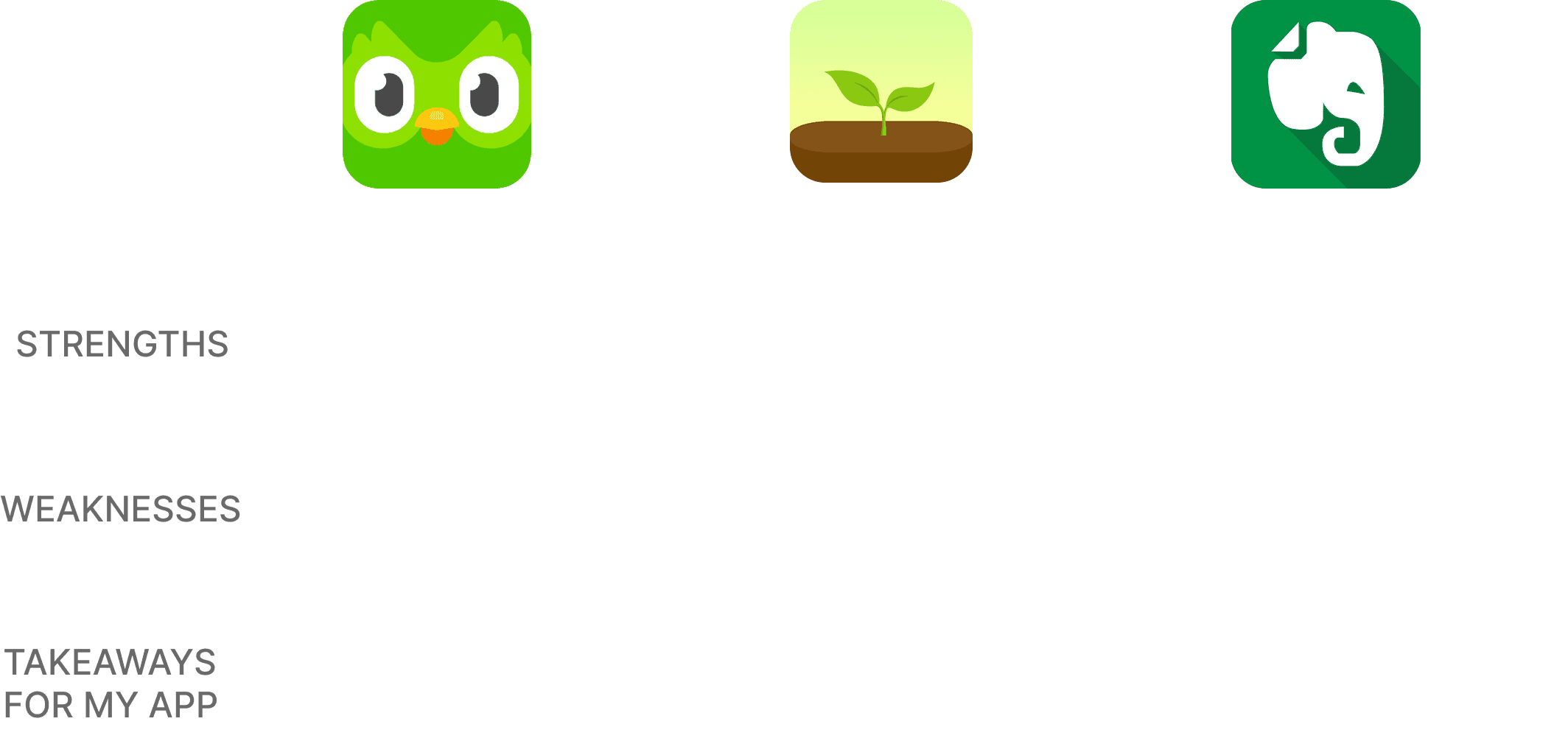
I selected Duolingo, Evernote, and Forest for my comparative analysis because each app represents a different strength that aligns with key aspects of my concept. By studying these three apps together, I was able to understand how to combine motivation, organization, and focus into a balanced, engaging time-management tool designed for students.


IDEATION

IDEATION

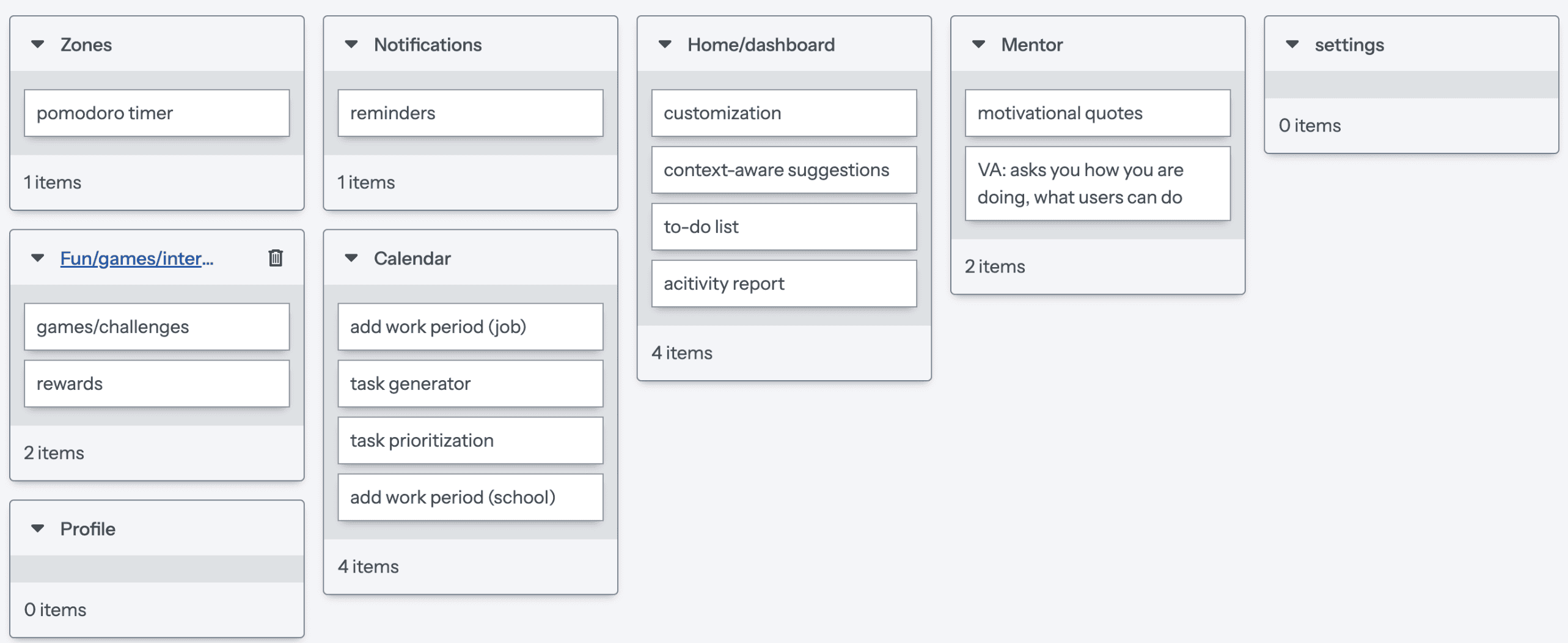
Designing an Intuitive Experience with Card Sorting

Designing an Intuitive Experience with Card Sorting

Game design Inspiration from Existing Apps

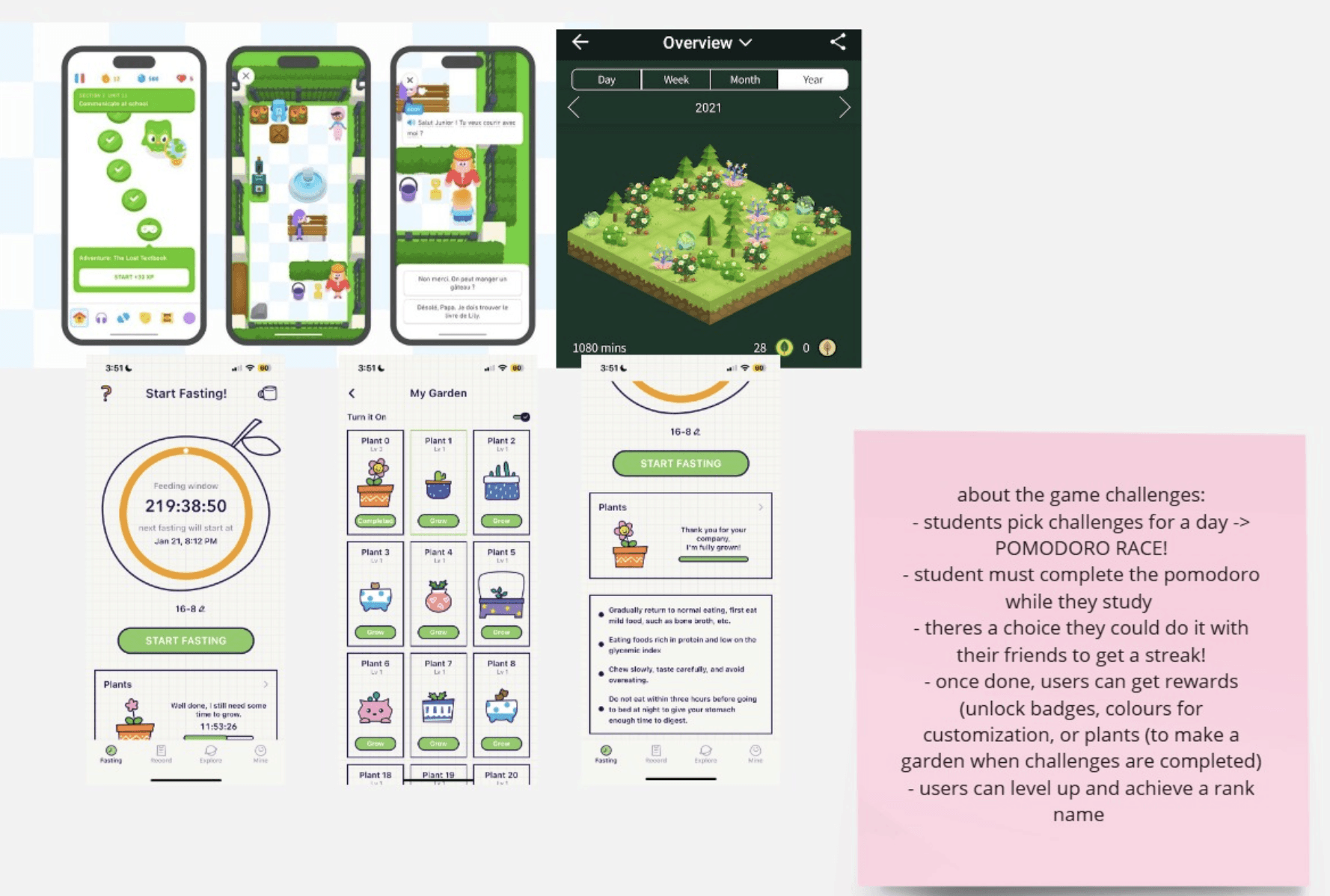
I studied gamified apps including Duolingo, Kahoot, and Forest to identify how rewards and progression sustain motivation. Based on these insights, I designed a Pomodoro-based challenge system with daily focus goals, rewards, streaks, and levels to support consistent study habits.


Designing Clear Pathways Across Core Features

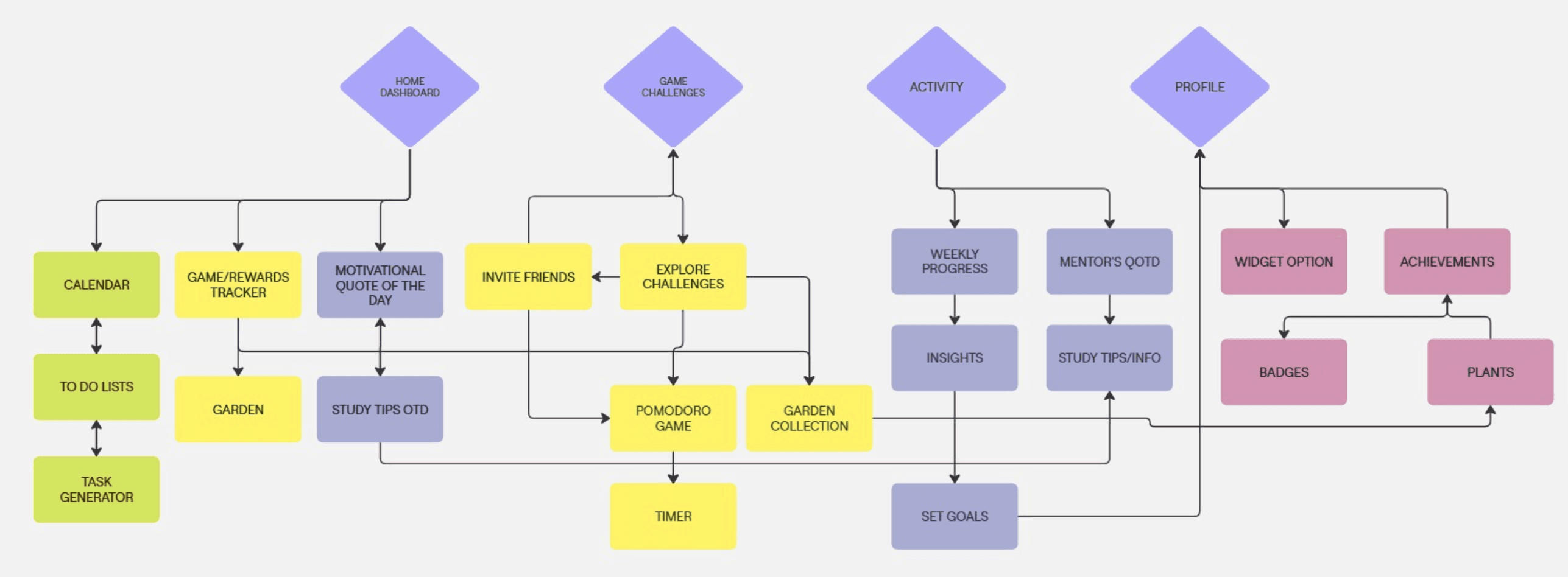
After organizing and prioritizing features, I translated these insights into a site map to define the app’s structure and guide user flow and clarify how users move between core features. By mapping each pathway from task creation to challenges, rewards, progress tracking, and profile customization, I was able to identify key decision points, streamline navigation, and remove unnecessary steps.

User Journey as a Design Guide

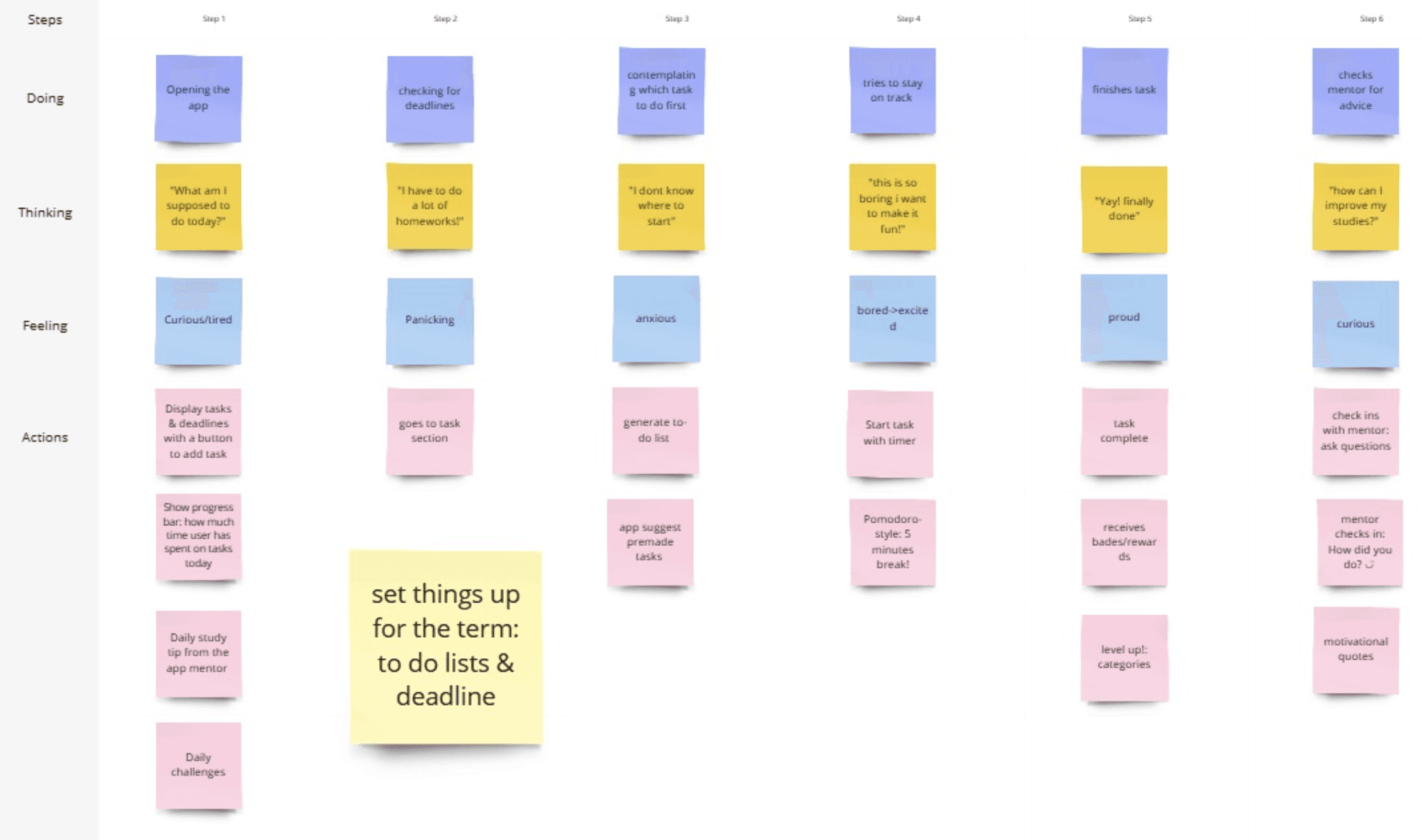
With the site map in place, I could analyze the user journey to uncover pain points and opportunities that would directly inform feature design. It also highlight opportunities where the app can support users with guidance, timers, rewards, and reminders. This helped ensure that each feature in my app directly responds to a real moment of need in the user's experience.

WIREFRAMES

From research into design by turning concepts into wireframes to test core flows and interactions.

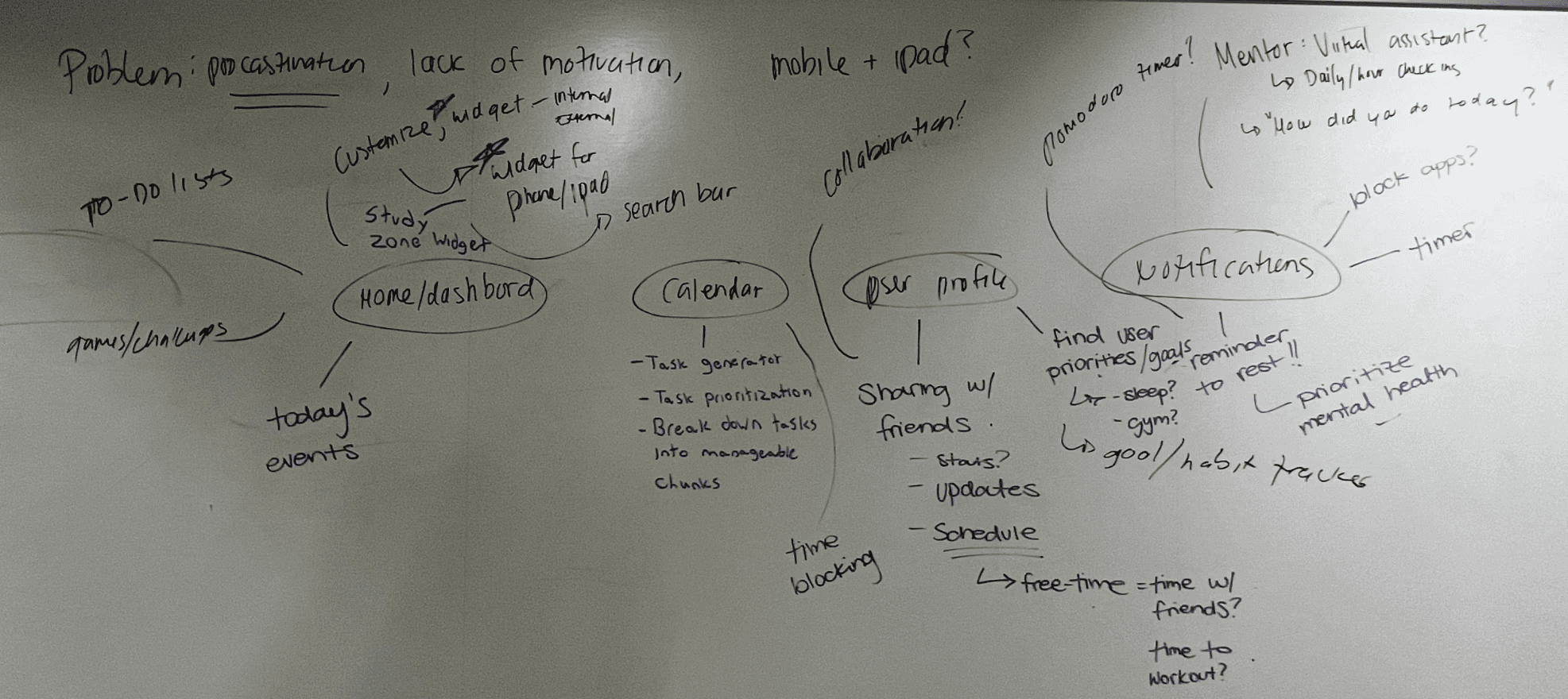
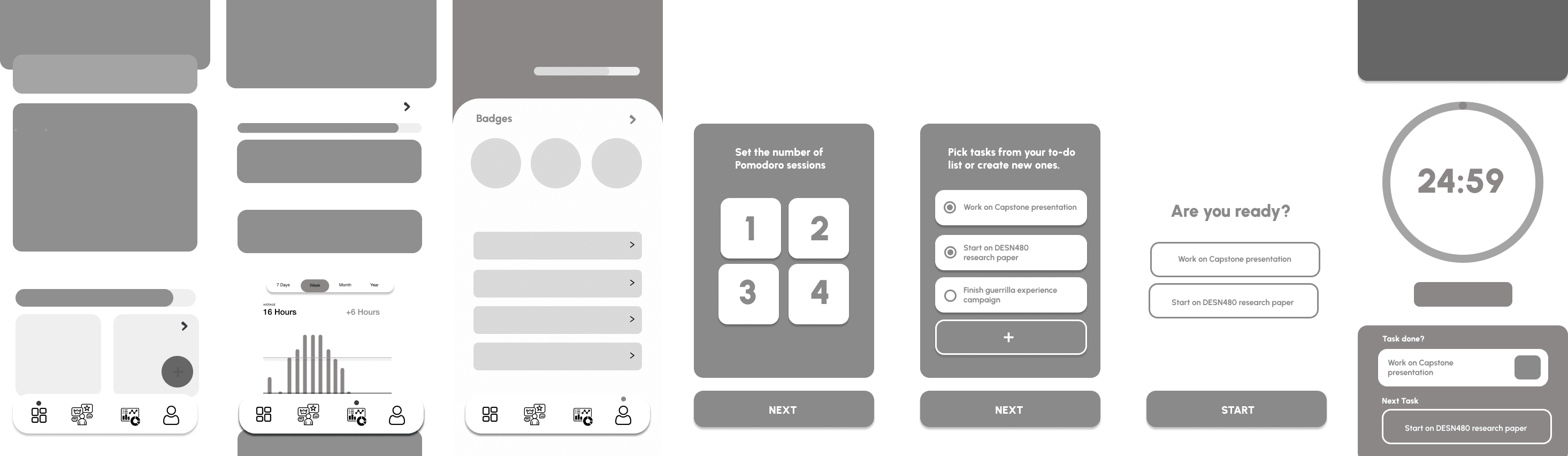
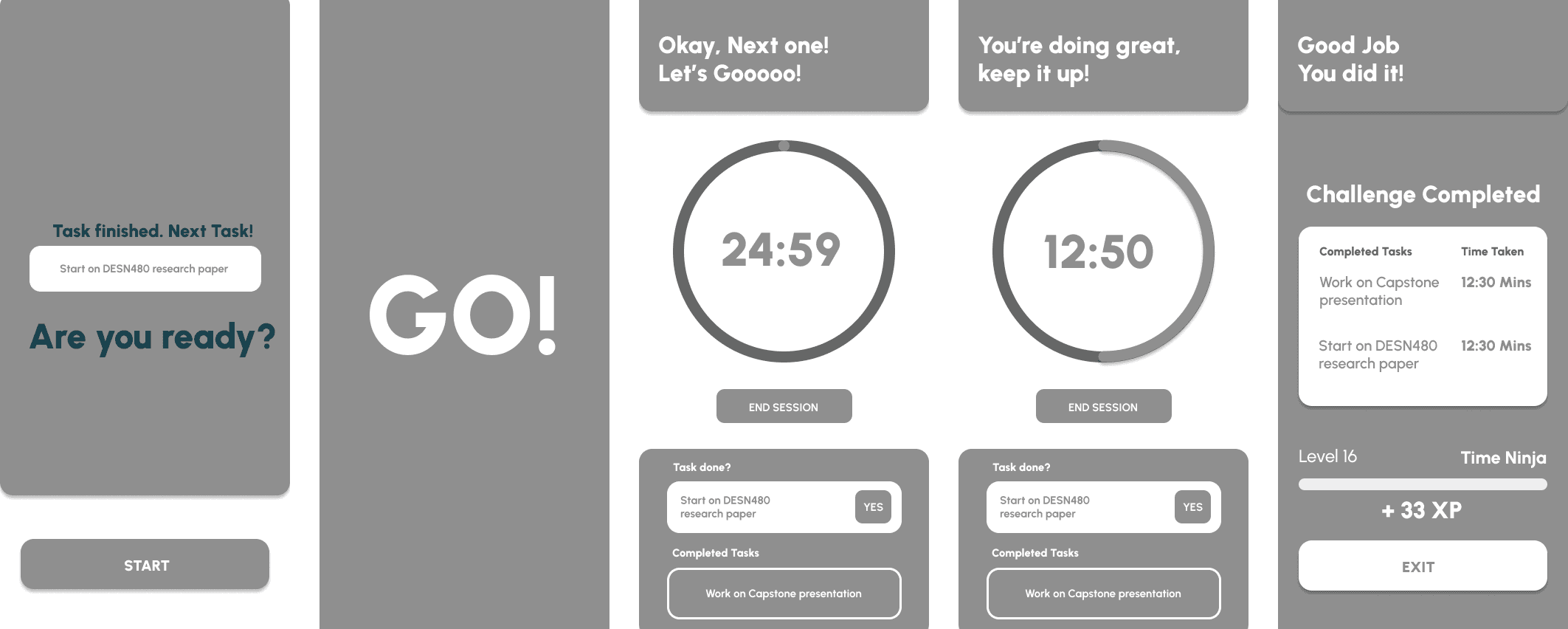
I translated early sketches from mid-fidelity to high-fidelity wireframes to define the core user flow and test the app’s game-based mechanics. Starting at mid-fidelity allowed me to shape layout, hierarchy, and interaction patterns early, especially around the focus-session experience.


Game design Inspiration from Existing Apps

I studied gamified apps including Duolingo, Kahoot, and Forest to identify how rewards and progression sustain motivation. Based on these insights, I designed a Pomodoro-based challenge system with daily focus goals, rewards, streaks, and levels to support consistent study habits.


Designing Clear Pathways Across Core Features

After organizing and prioritizing features, I translated these insights into a site map to define the app’s structure and guide user flow and clarify how users move between core features.

User Journey as a Design Guide

With the site map in place, I could analyze the user journey to uncover pain points and opportunities that would directly inform feature design. This helped ensure that each feature in my app directly responds to a real moment of need in the user's experience.

WIREFRAMES

From research into design by turning concepts into wireframes to test core flows and interactions.

I translated early sketches from mid-fidelity to high-fidelity wireframes to define the core user flow and test the app’s game-based mechanics. Starting at mid-fidelity allowed me to shape layout, hierarchy, and interaction patterns early, especially around the focus-session experience.


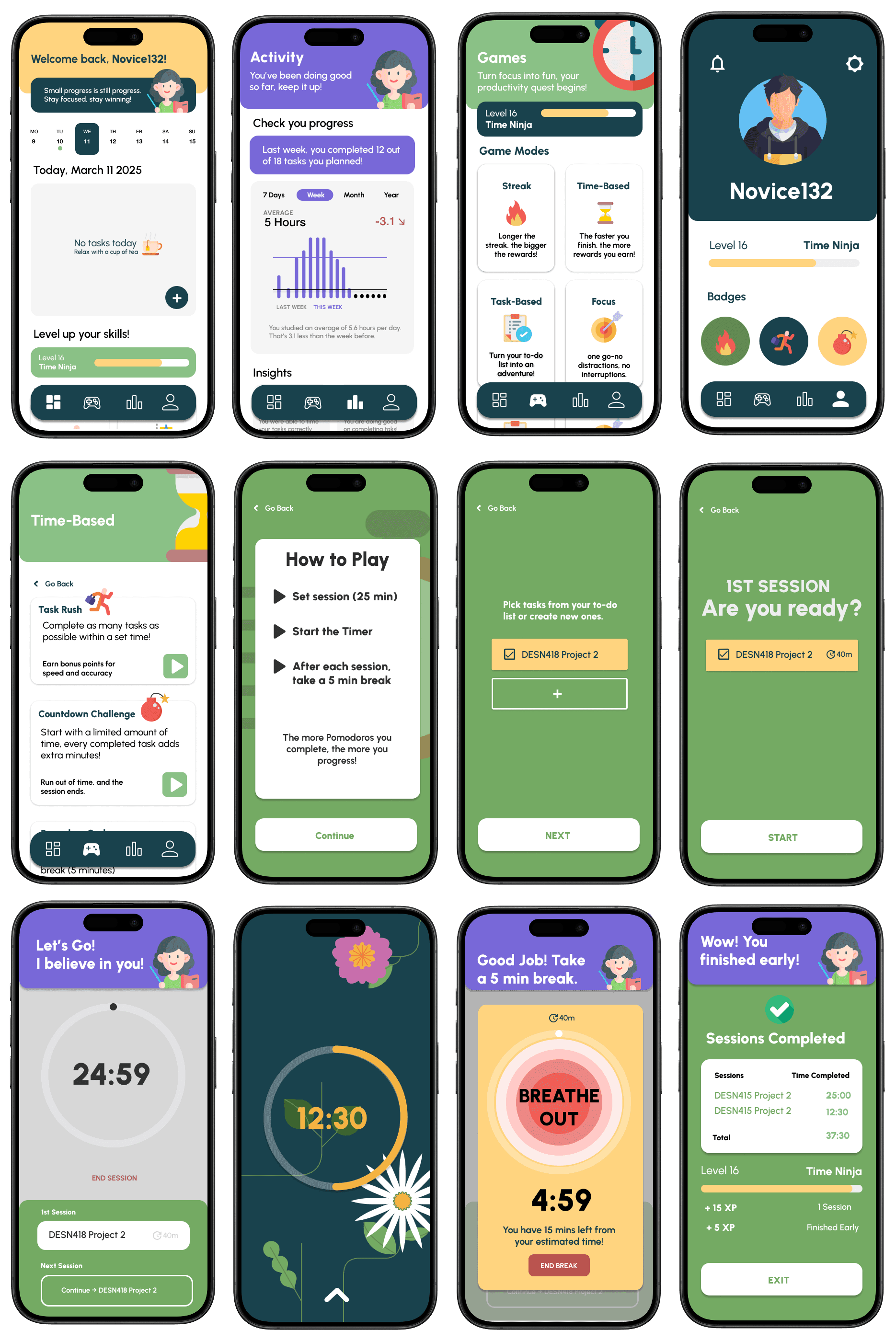
By incorporating colour, typography, and micro-interactions, I was able to create a polished prototype that closely represents the final user experience while making it easy to test and iterate on key features.


VISUAL COMPONENTS

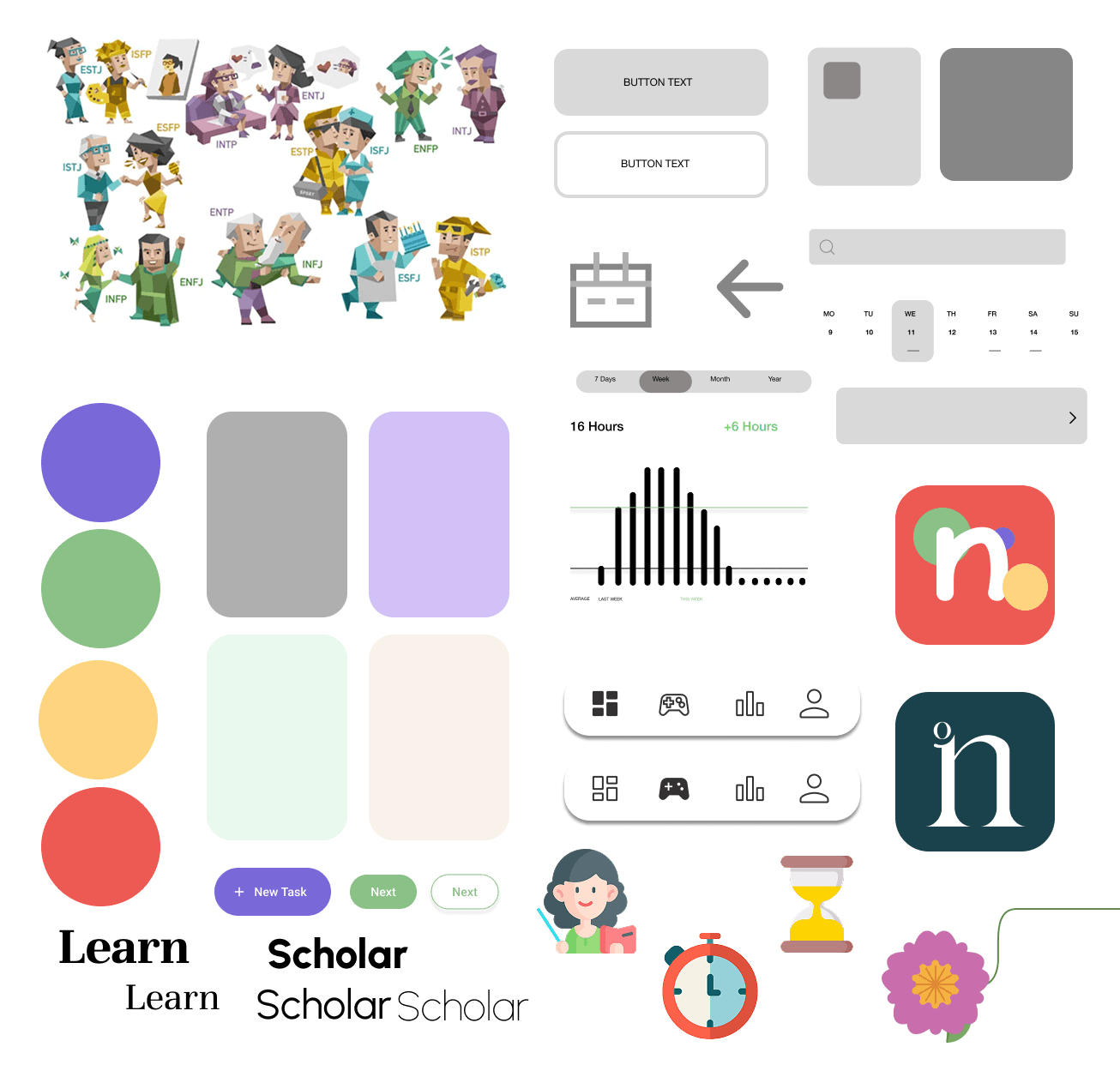
This visual identity board combines my mood-board and early style guide, showing the core look and feel of the app. The pastel colours, rounded shapes, and playful illustrations set a friendly, game-like tone, while the UI elements: buttons, cards, icons, and typography, start to define a consistent design system.


By incorporating colour, typography, and micro-interactions, I was able to create a polished prototype that closely represents the final user experience while making it easy to test and iterate on key features.


VISUAL COMPONENTS

This visual identity board combines my mood-board and early style guide, showing the core look and feel of the app. The pastel colours, rounded shapes, and playful illustrations set a friendly, game-like tone, while the UI elements: buttons, cards, icons, and typography, start to define a consistent design system.


FINAL DESIGNS

FINAL DESIGNS

Where ideas meet interaction

Where ideas meet interaction

To-do list

To-do list

To-do list

with gamified feature

with gamified feature

with gamified feature

  • Integrated with Pomodoro-style gameplay to encourage focused study sessions.

  • Enabled students to break tasks into manageable segments, maintain focus, and track daily goal completion.

  • Combines planning and gamification to enhance motivation and productivity.

  • Designed daily to-do lists with priority (high/low) and time estimates for each task.

  • Integrated with Pomodoro-style gameplay to encourage focused study sessions.

  • Enabled students to break tasks into manageable segments, maintain focus, and track daily goal completion.

  • Combines planning and gamification to enhance motivation and productivity.

  • Designed daily to-do lists with priority (high/low) and time estimates for each task.

Pomodoro Game

Pomodoro Game

Pomodoro Game

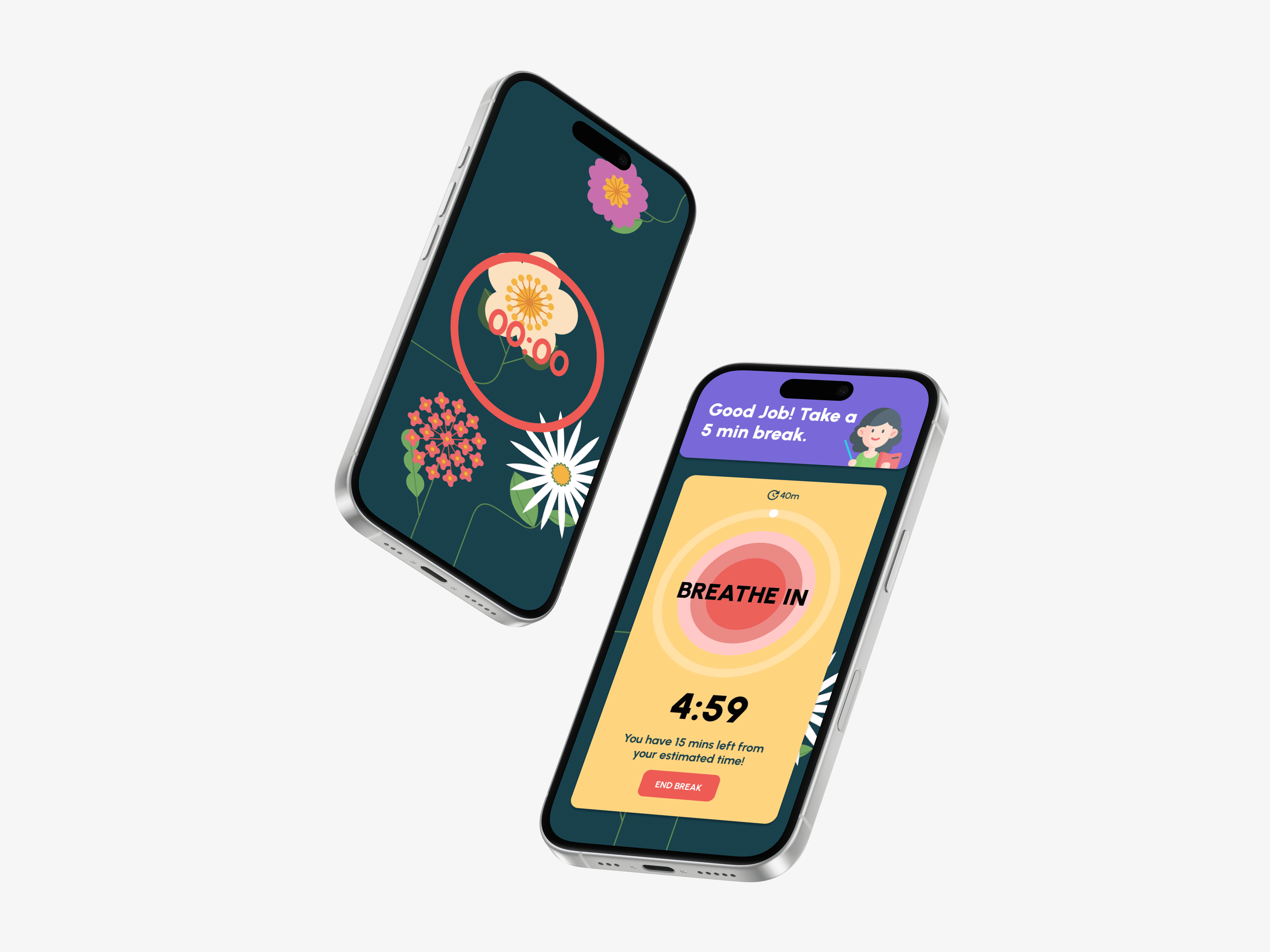
  • Students complete timed Pomodoro sessions for to-do list tasks, earning rewards such as badges, virtual plants, and customization options.

  • Social features enable streaks with friends, promoting accountability and consistency.

  • Encourages focus, reduces procrastination, and supports long-term habit formation.

  • Students complete timed Pomodoro sessions for to-do list tasks, earning rewards such as badges, virtual plants, and customization options.

  • Social features enable streaks with friends, promoting accountability and consistency.

  • Encourages focus, reduces procrastination, and supports long-term habit formation.

Activity Report

Activity Report

Activity Report

  • Provides insights into study habits, helping students stay motivated and reflect on productivity.

  • Students track progress, view hours spent on assignments, and monitor improvements over time while using the Pomodoro game.


  • Provides insights into study habits, helping students stay motivated and reflect on productivity.

  • Students track progress, view hours spent on assignments, and monitor improvements over time while using the Pomodoro game.


REFLECTIONS

Key Insights from a Solo Endeavour

This was one of my largest solo projects, teaching me how to manage the full design process independently while collaborating with other designers when needed. Working with students through interviews and co-design sessions helped me understand their needs and create user-centered solutions. The project strengthened my skills in research, design, and turning insights into engaging, actionable experiences.

This was one of my largest solo projects, teaching me how to manage the full design process independently while collaborating with other designers when needed. Working with students through interviews and co-design sessions helped me understand their needs and create user-centered solutions. The project strengthened my skills in research, design, and turning insights into engaging, actionable experiences.

Re-thinking what time management really means..

I treated time management as a skill built through practice, not just schedules. Since students struggle more with consistency than knowledge, I shifted focus from planners to motivation and behaviour change, using habit formation, game mechanics, and time-based challenges.

I treated time management as a skill built through practice, not just schedules. Since students struggle more with consistency than knowledge, I shifted focus from planners to motivation and behaviour change, using habit formation, game mechanics, and time-based challenges.

Questions for further improvement

•  How intuitive and low-effort is the Pomodoro experience for students during busy or stressful days?
• Which game mechanics are most effective at maintaining long-term motivation and consistency?
• How well does the system support habit formation, especially after missed sessions or broken streaks?
• How can personalization and social features better adapt to different schedules, stress levels, and comfort with sharing?

•  How intuitive and low-effort is the Pomodoro experience for students during busy or stressful days?
• Which game mechanics are most effective at maintaining long-term motivation and consistency?
• How well does the system support habit formation, especially after missed sessions or broken streaks?
• How can personalization and social features better adapt to different schedules, stress levels, and comfort with sharing?

•  How intuitive and low-effort is the Pomodoro experience for students during busy or stressful days?
• Which game mechanics are most effective at maintaining long-term motivation and consistency?
• How well does the system support habit formation, especially after missed sessions or broken streaks?
• How can personalization and social features better adapt to different schedules, stress levels, and comfort with sharing?